
Service
Garage Door Opener Installation Across Oklahoma City
Garage door opener installation for Oklahoma City houses built 1959-2002, serving areas from Del City to Nicoma Park in a cold, moderate winter climate.
- Licensed & Insured
- Same-Area Service Calls
- Upfront Pricing
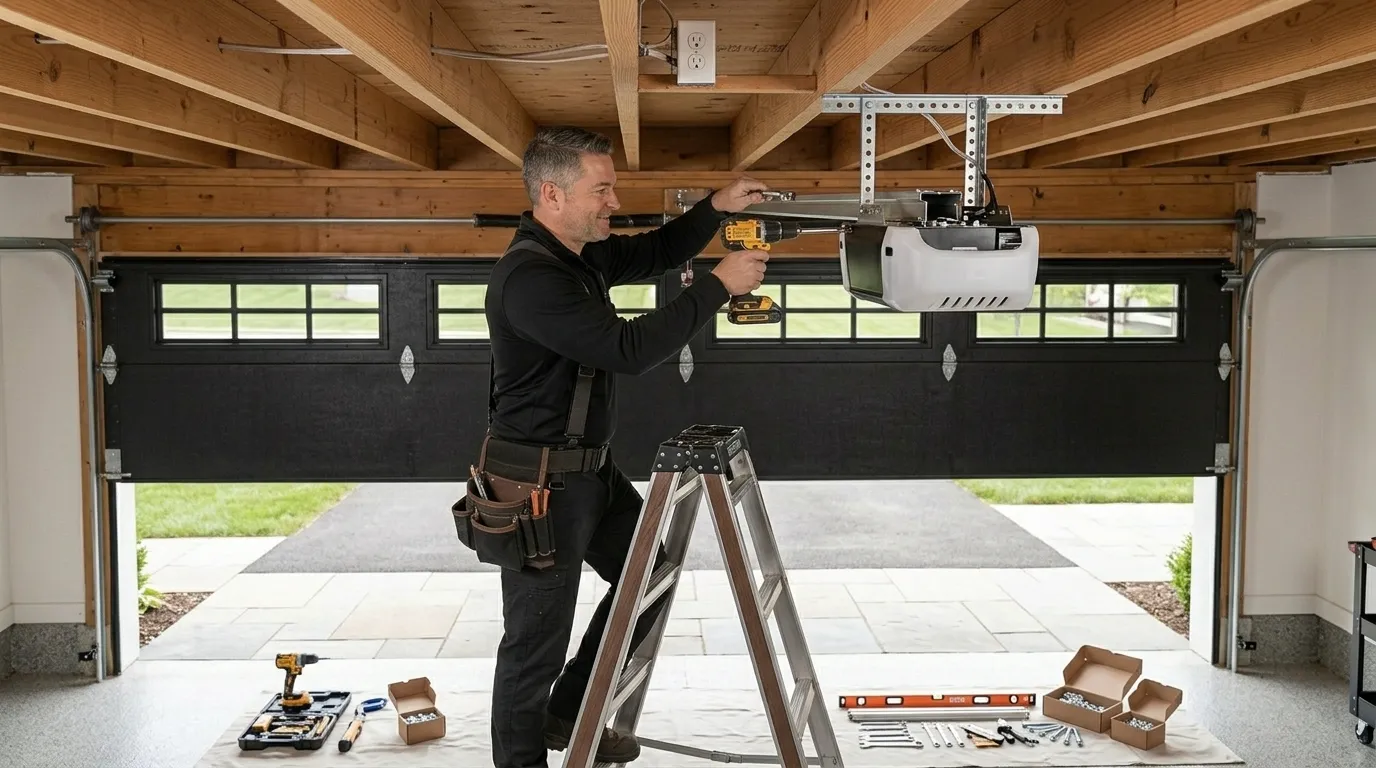
What Happens When You Call
-
1
Call or Request a Quote
Tell us what the door is doing and roughly how old the house is - that alone points us toward the likely part before a truck leaves.
-
2
On-Site Diagnosis
A tech checks the spring, cables, tracks, and opener in person and tells you plainly what is actually wrong.
-
3
Straight Price, No Surprises
You get a number before any work starts. It covers parts and labor, nothing added after the fact.
-
4
Fixed the Same Visit
Most repairs are done in one trip. If a part needs sourcing, we tell you that upfront instead of guessing.
Parts We Carry
We stock chain-drive, belt-drive, and screw-drive opener units, along with the wall console, remote, keypad, and photo-eye safety sensor pair that has to come with every new install by code. Chain drives are the workhorse choice for detached garages and outbuildings where noise doesn't matter. Belt drives run quieter and hold up better when a garage sits under or near a bedroom, which is common in the older single-story layouts scattered through this area's 1960s and 70s housing stock.
We also carry the mounting hardware that older houses usually need replacing along with the motor: header brackets, curved arm assemblies, and the low-headroom kits for garages where the track sits tighter to the ceiling than current openers expect. If your existing rail or drive gear is from a unit installed decades ago, we don't try to force a new motor onto old hardware just to save a trip back to the truck - mismatched brackets are how openers pull loose from the header within a year.
One limitation worth saying plainly: we don't carry every proprietary remote or smart-hub accessory on the shelf. Specialty parts sometimes mean a short order wait, and we'll tell you that up front instead of promising same-day on something we don't have in stock.
Why This Fails Locally
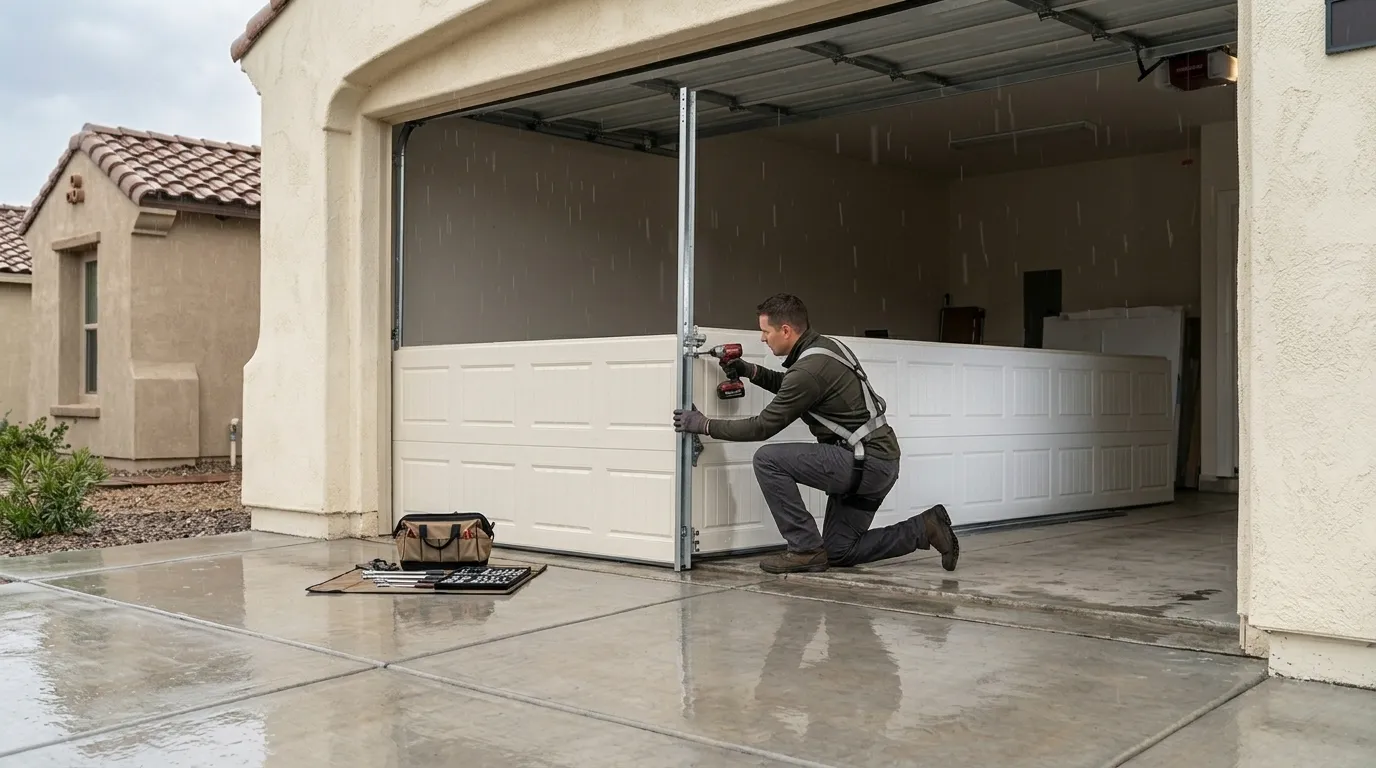
Housing across this service area was mostly built between 1959 and 2002, with the heaviest concentration going up in the 1960s and 70s. That means a large share of garages still have openers, or at least opener hardware, that predates the belt-drive and safety-sensor standards common today. A lot of these houses were built with single-car or narrow double garages, tracks sized for lighter doors, and headers that were never meant to carry a modern 1/2 HP unit without added bracing.
Oklahoma City sits in a cold, moderate climate band, and that seasonal swing is hard on an opener that's already been running since the Nixon or Carter administration. Grease inside the gear housing thickens in cold spells and breaks down faster once it's old, which is exactly the kind of wear you see on units original to houses from this era. Combine an aging motor, a header never upgraded for a heavier door, and a winter cold snap, and the opener is often the first thing to quit - not the spring, not the cables.
This isn't a problem unique to any one street. It shows up the same way across the 1960s-70s stock found from the Arts District out through Del City and Midwest City: original hardware meeting a climate it wasn't built to keep running in.
The Symptom
The most common call we get for this job isn't a door that won't open at all - it's a motor that hums or grinds but the door doesn't move, which usually means a stripped drive gear inside the opener housing rather than anything wrong with the door itself. Close behind that: a remote or keypad that worked fine all summer and starts missing signals once temperatures drop, often because the receiver board is original equipment and its solder joints have gotten brittle with age.
Some owners describe the door reversing partway up or down for no clear reason. That's frequently a worn limit switch or a safety sensor pair that's drifted out of alignment - not dangerous by itself, but a sign the whole unit is at the end of its working life rather than one part away from being fine.
We also see openers that run but lag noticeably behind the door, straining audibly on the last foot of travel. On a heavier insulated door retrofitted onto an opener sized for the lighter original door that came with a 1960s or 70s build, that lag is the motor doing more work than it was built for, every single cycle, until it doesn't.
The Cost of This Job
What drives the cost on this job is mostly what's already there, not the new opener itself. A house with its original 1960s or 70s wiring and bracket setup usually needs a header reinforcement kit and sometimes new low-voltage wiring run to the wall console - work you don't see until the old unit comes off the ceiling. A house with a prior opener replacement already done right is a faster, cheaper job because the hardware's already current.
Drive type matters too. Chain drives are generally the lower-cost option; belt drives cost more up front but run quieter, which matters in the tighter single-story layouts common to this area's older housing stock. Smart-hub and battery-backup features add cost on top of either.
With a median household income of $75,000 across the service area and tens of thousands of owner-occupied houses built in that same 1960s-70s window, most of the calls we get aren't about the cheapest opener on the shelf - they're about getting one job done right instead of paying for a stopgap twice. We'll tell you honestly when a repair on an old unit isn't worth doing and a full swap makes more sense, rather than patching something that's going to fail again by next winter.
Talk to a Technician Before You Book
Describe what the door is doing and get a straight answer on what it likely needs.
Jobs Like Yours
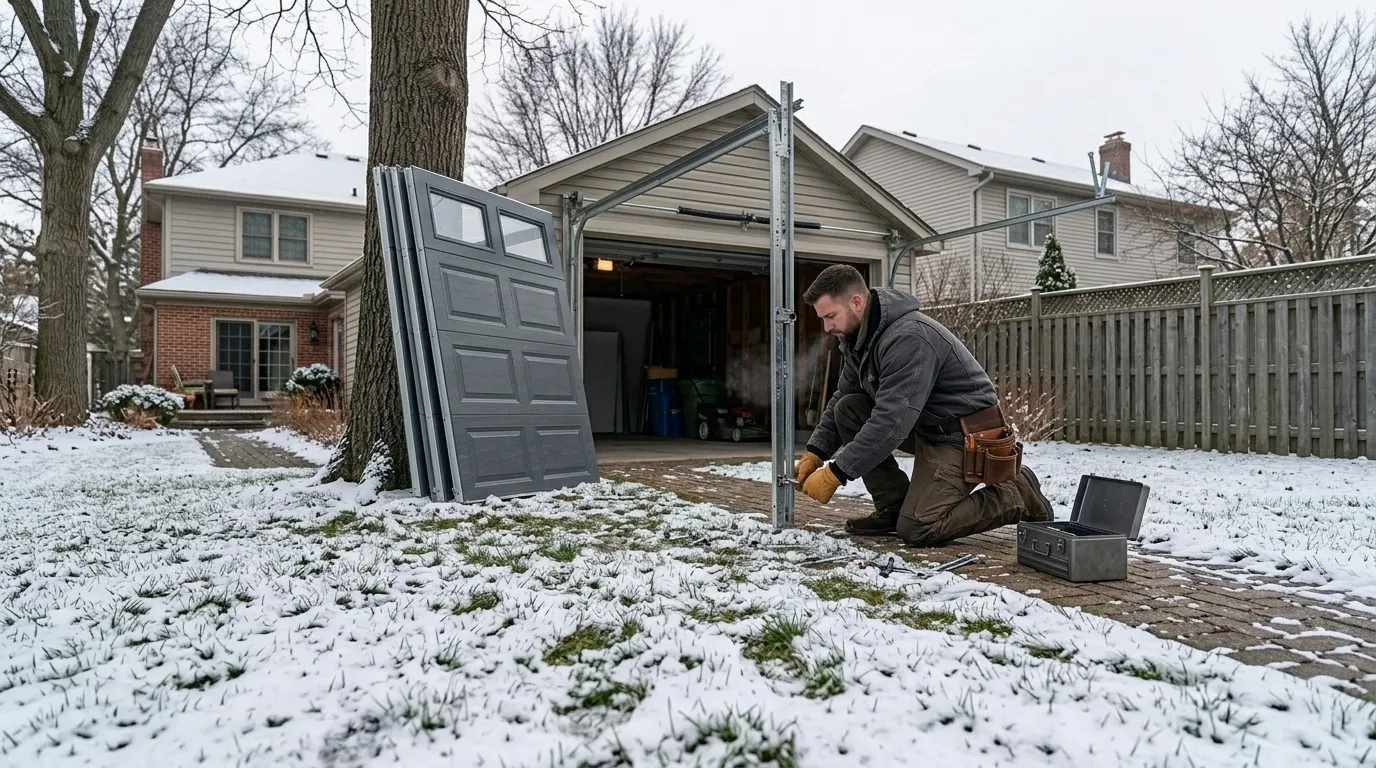
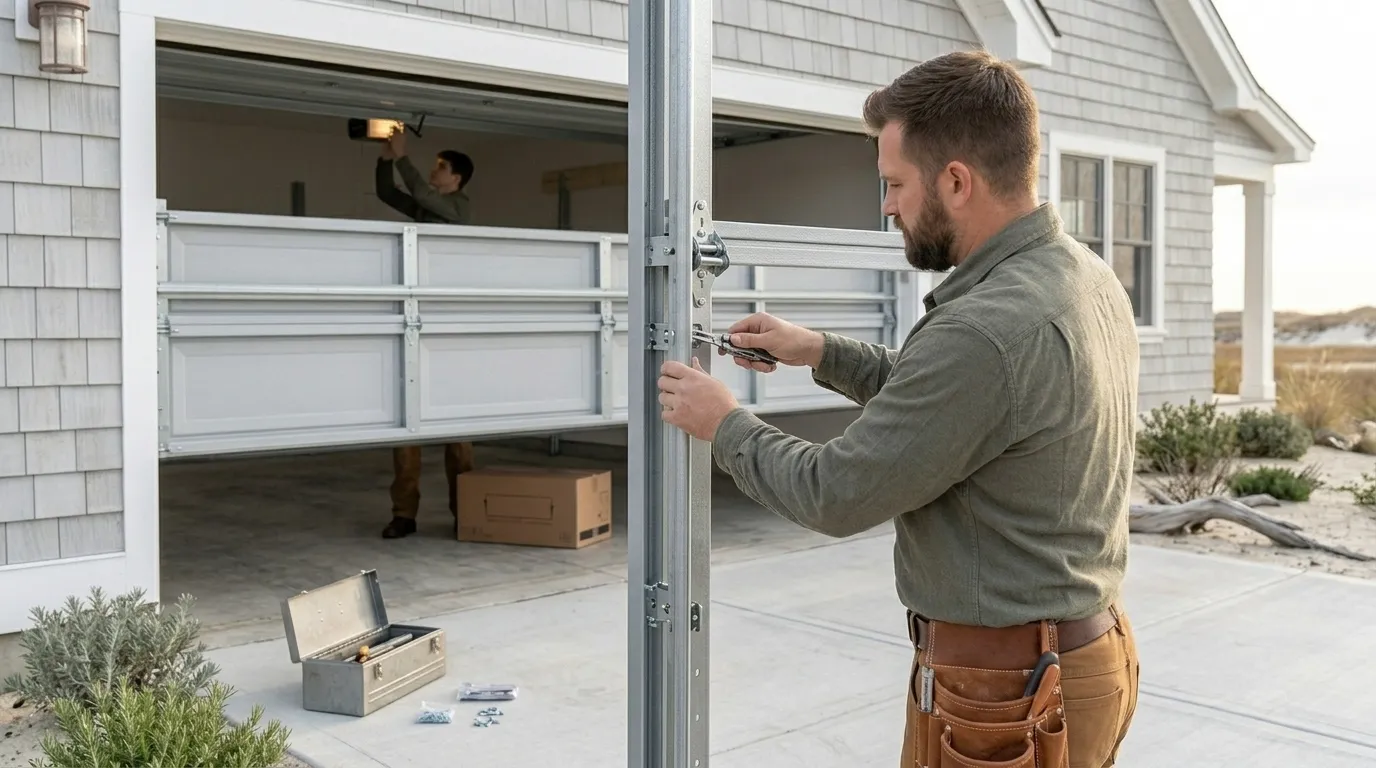
Recent work from this service line.
Why Oklahoma City Calls Us
Frequently Asked Questions
Can you install a new opener on my existing garage door and track?
Usually, yes, if the existing track and hardware are in decent shape. Houses built in the 1960s and 70s sometimes need a header bracket upgrade or curved arm swap to handle a modern opener safely, which we'll check before we quote anything.
Why did my opener start acting up once it got cold?
Old grease inside the gear housing thickens in cold weather, and receiver boards on older units get more failure-prone with age. Combine an aging opener with a cold-moderate winter swing and that's usually when a marginal unit finally quits.
Do you carry parts for older opener brands, or just current models?
We stock the common chain-drive, belt-drive, and screw-drive units along with standard brackets and wiring. Specialty or proprietary remotes for some older systems aren't always on the truck, and we'll tell you if a part needs to be ordered instead of promising same-day.
Is a belt drive worth the extra cost over a chain drive?
If your garage sits under or near a bedroom, which is common in the single-story layouts found through a lot of this area's older housing stock, the quieter belt drive is usually worth it. For a detached garage where noise doesn't matter, chain drive does the same job for less.
Need Garage Door Opener Installation Across Oklahoma City?
Call now for straight answers on cost and timing.