
Garage Door Repair in Midwest City
Garage Door Repair for Midwest City's 1970s-Built Homes
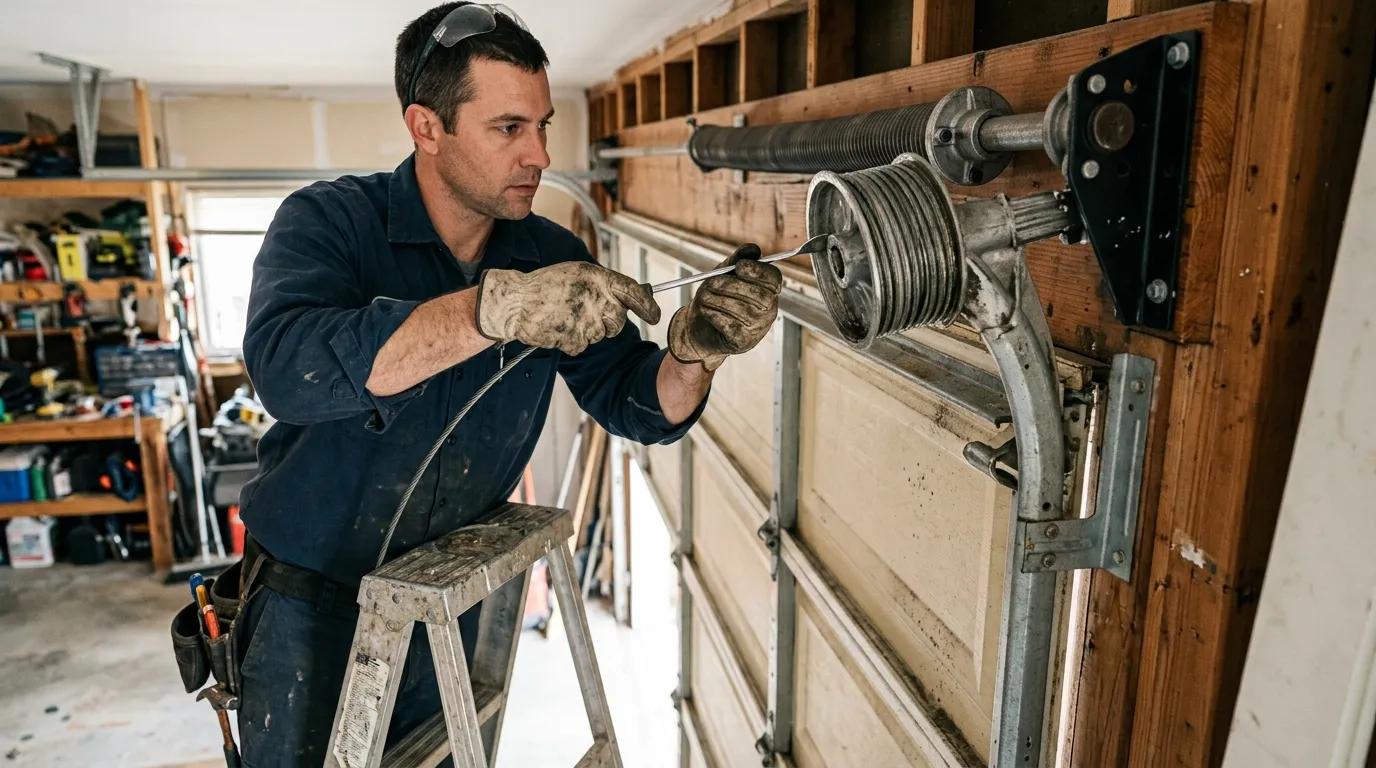
Midwest City homes date mostly to 1974, meaning steel doors on extension springs are common. We travel from Oklahoma City, 8 miles west, for repairs.
- Licensed & Insured
- Same-Area Service Calls
- Upfront Pricing
What Happens When You Call
-
1
Call or Request a Quote
Tell us what the door is doing and roughly how old the house is - that alone points us toward the likely part before a truck leaves.
-
2
On-Site Diagnosis
A tech checks the spring, cables, tracks, and opener in person and tells you plainly what is actually wrong.
-
3
Straight Price, No Surprises
You get a number before any work starts. It covers parts and labor, nothing added after the fact.
-
4
Fixed the Same Visit
Most repairs are done in one trip. If a part needs sourcing, we tell you that upfront instead of guessing.
What Can Go Wrong
Midwest City's houses cluster around a median build year of 1974, a shade newer than the 1972 median across the wider service area but still solidly in the same window - the years when steel sectional doors on extension springs, mounted on a single center bracket, were the standard install. That hardware is fifty years old in most of these houses now, even where the door itself got swapped out once along the way. What breaks: the extension springs stretch and lose tension unevenly, so one side of the door sags and the opener strains against it.
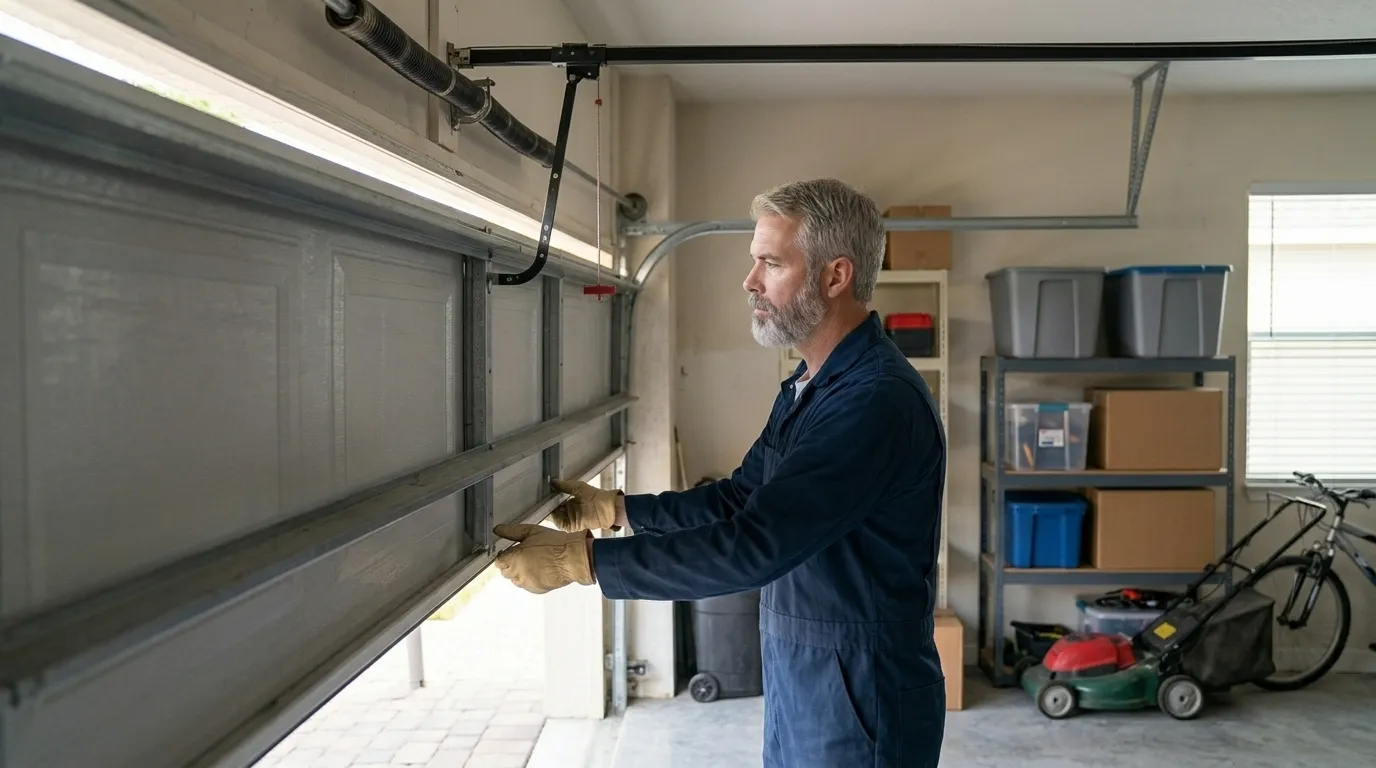
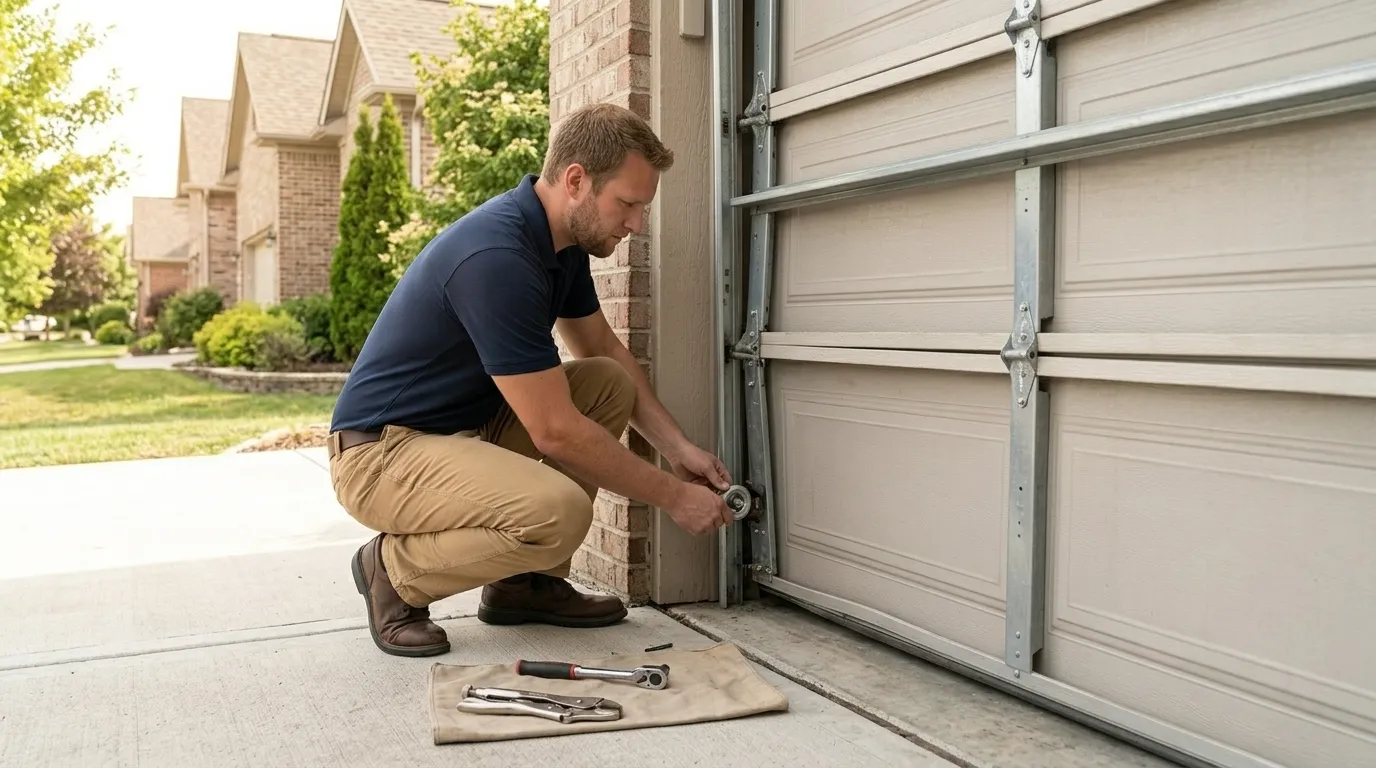
The center support bracket, original to a lot of these garages, cracks or works loose from decades of that same lopsided pull. Rollers on the original steel tracks wear oval instead of round, and you hear it as a grinding rattle before the door ever actually jams. Openers from a later retrofit era - chain drives bolted onto a door built for none - throw the door off its rail if the alignment was ever off by even a little.
None of this is exotic. It's just what happens to doors and springs that have outlived the houses' first two or three owners.
Why This Fails Locally
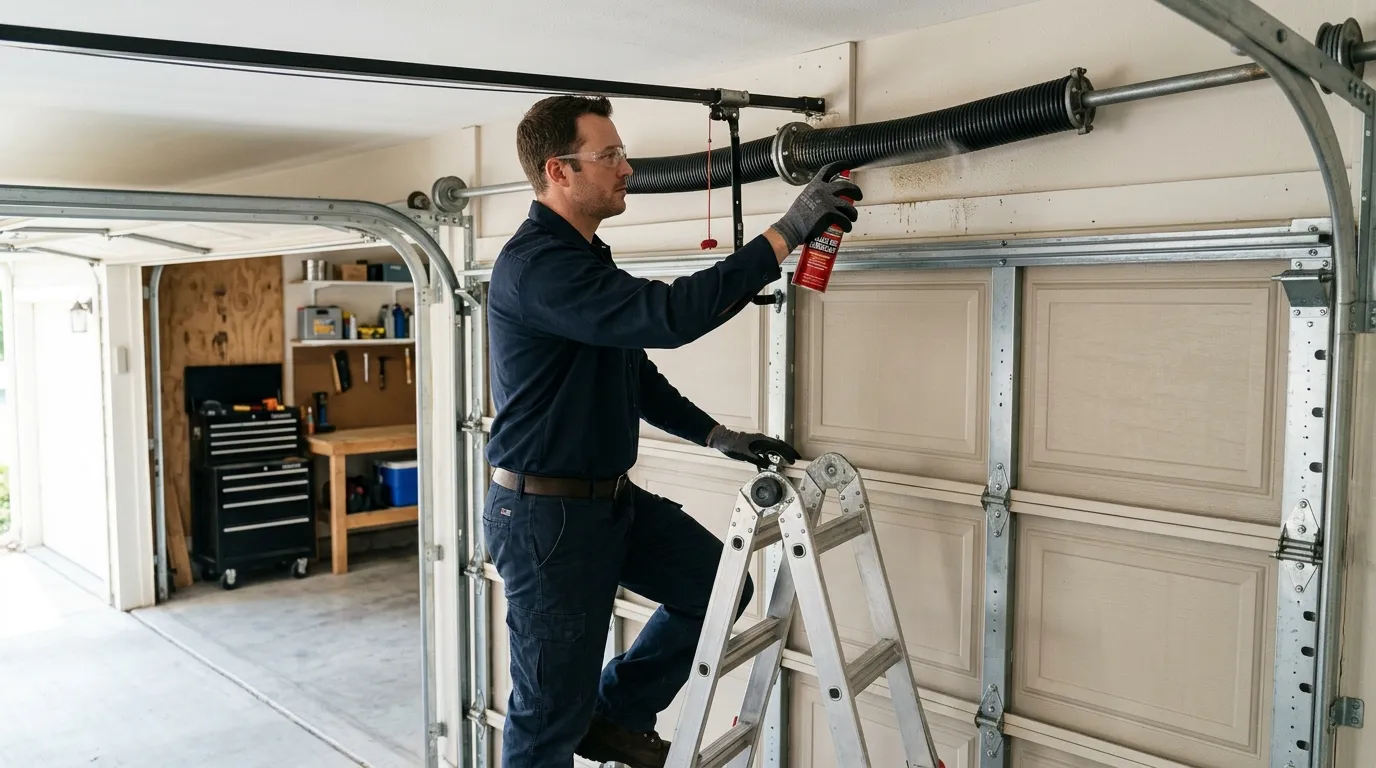
The failure pattern here isn't random - it's a function of the housing stock. A door built or replaced anywhere close to 1974 almost never has dual torsion springs on a center shaft; it has a pair of extension springs running along each horizontal track, hooked to a pulley cable system that was cheap to install then and is a pain to service now. Those parts don't fail gracefully.
An extension spring that snaps doesn't just stop the door - it can send the door slamming down or let it hang crooked on one cable, which is a hazard, not an inconvenience. With 24,599 households in Midwest City and a median income of $57,739 - noticeably below the $75,000 median across the broader service area - a lot of owners here are weighing a $40 roller against a $300 spring replacement more carefully than a newer, wealthier suburb might. That's a real constraint, and we work with it: we tell you plainly what's failing and what it costs before we touch anything, rather than pushing a full opener swap when a cable and a pair of springs will get the door running safely for years more.
How Long It Takes
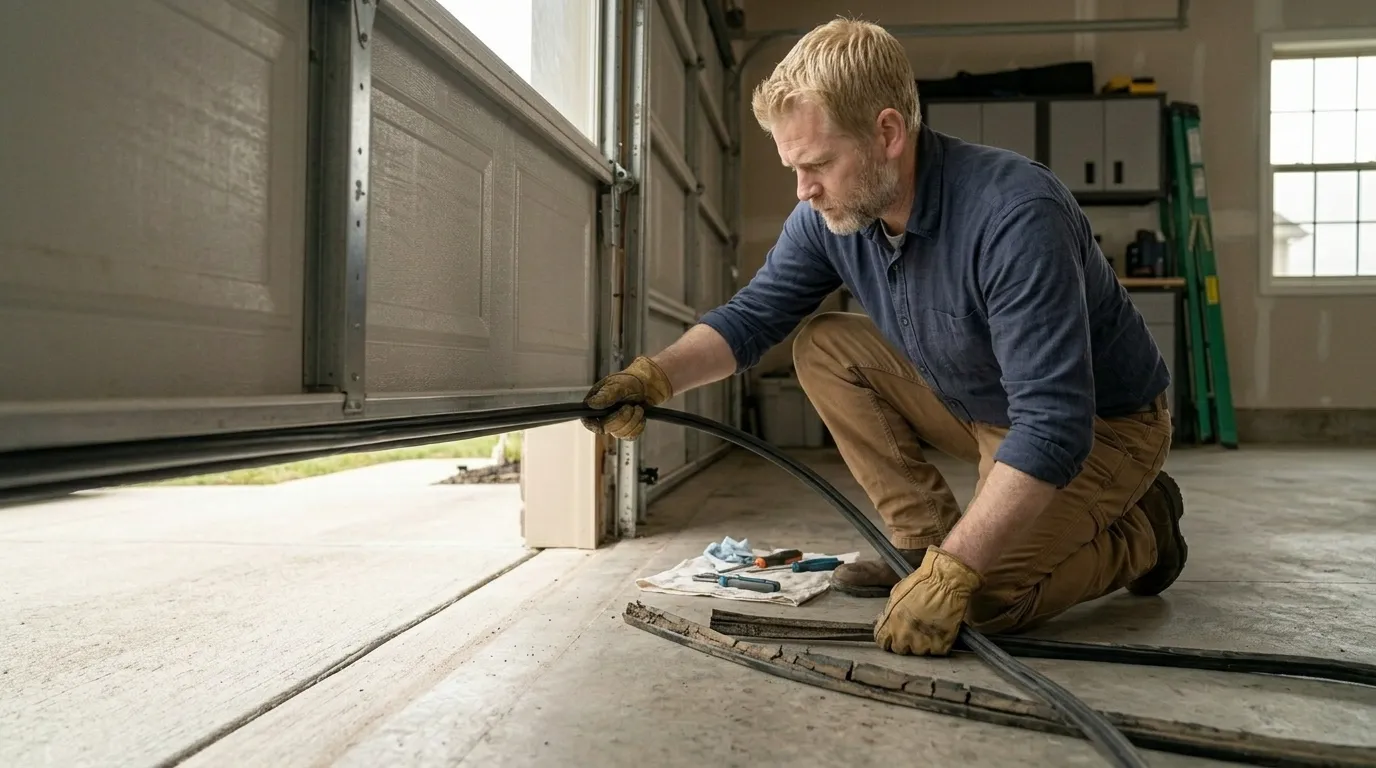
A standard spring or cable repair on a door from this era usually runs under two hours once the truck is on site, since the hardware is well understood and the parts are common stock. Track realignment and roller replacement is similar - most of that time is diagnosis, not labor. Where it stretches longer is when the center support bracket itself has cracked or pulled away from the header, which is more common on houses built right around 1974 than on newer construction, because that bracket has had five decades of stress instead of two.
That's a structural fix, not a swap, and it takes longer to do right. We're coming from Oklahoma City, about eight miles west, so factor that into when the truck actually arrives - we don't keep a branch or a depot in Midwest City, and we won't tell you otherwise.
How We Fix It
We start by checking which system the door actually has, because a house built in 1959 and one built in 1985 in the same neighborhood can have completely different spring setups even though both fall inside the area's 1959-2002 build range. For the extension-spring doors common to Midwest City's 1974 median, we replace both springs as a pair - never just the broken one, because the second is on the same clock and will go within a season if left alone. We check the center bracket under load, not just by eye, since a bracket that looks fine can still be pulling loose from the header.
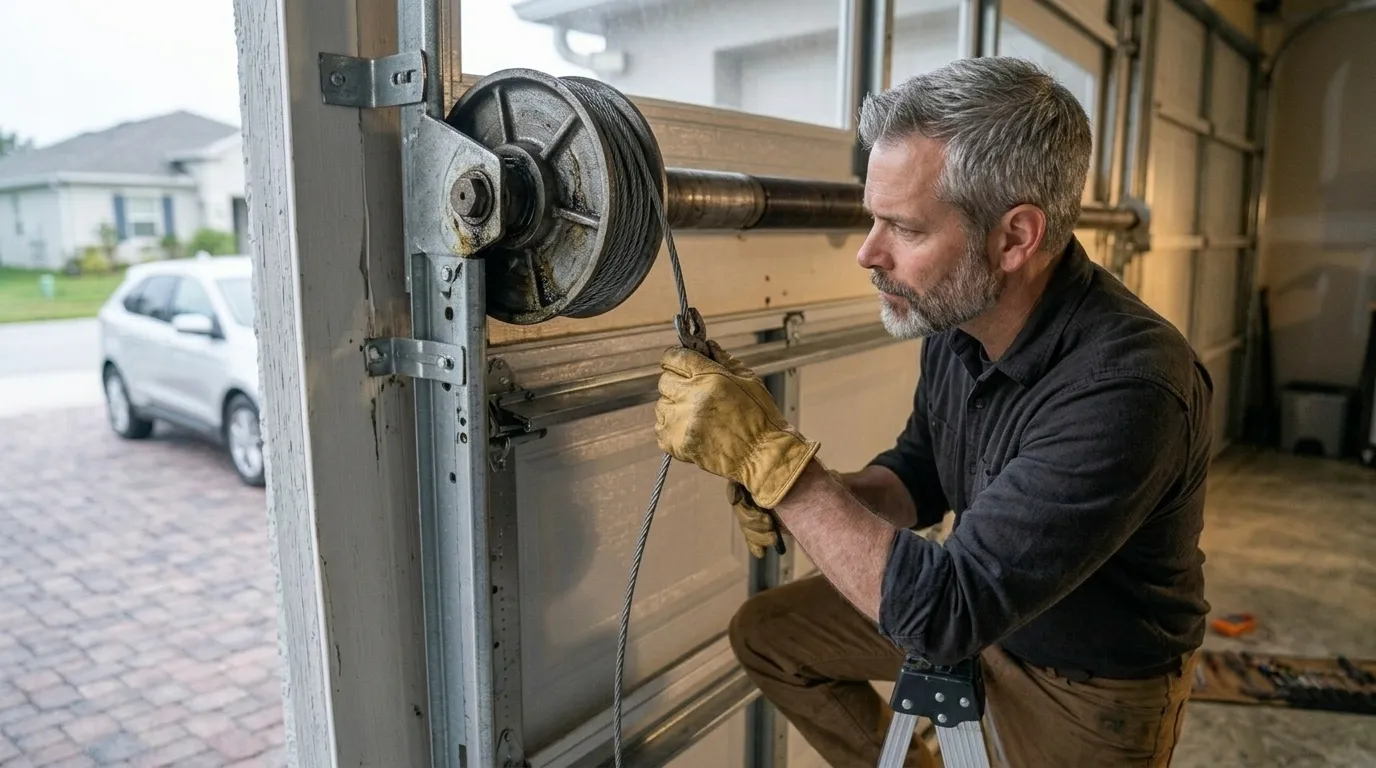
Cables get inspected for fraying at the drum, not just at the visible run, since that's where they actually fail. If the opener is a later retrofit that's fighting the door's balance, we rebalance the door first - an opener will burn out its gears trying to lift a door that's out of spring tension, and replacing the opener without fixing that just buys you a second failure.
Parts We Carry
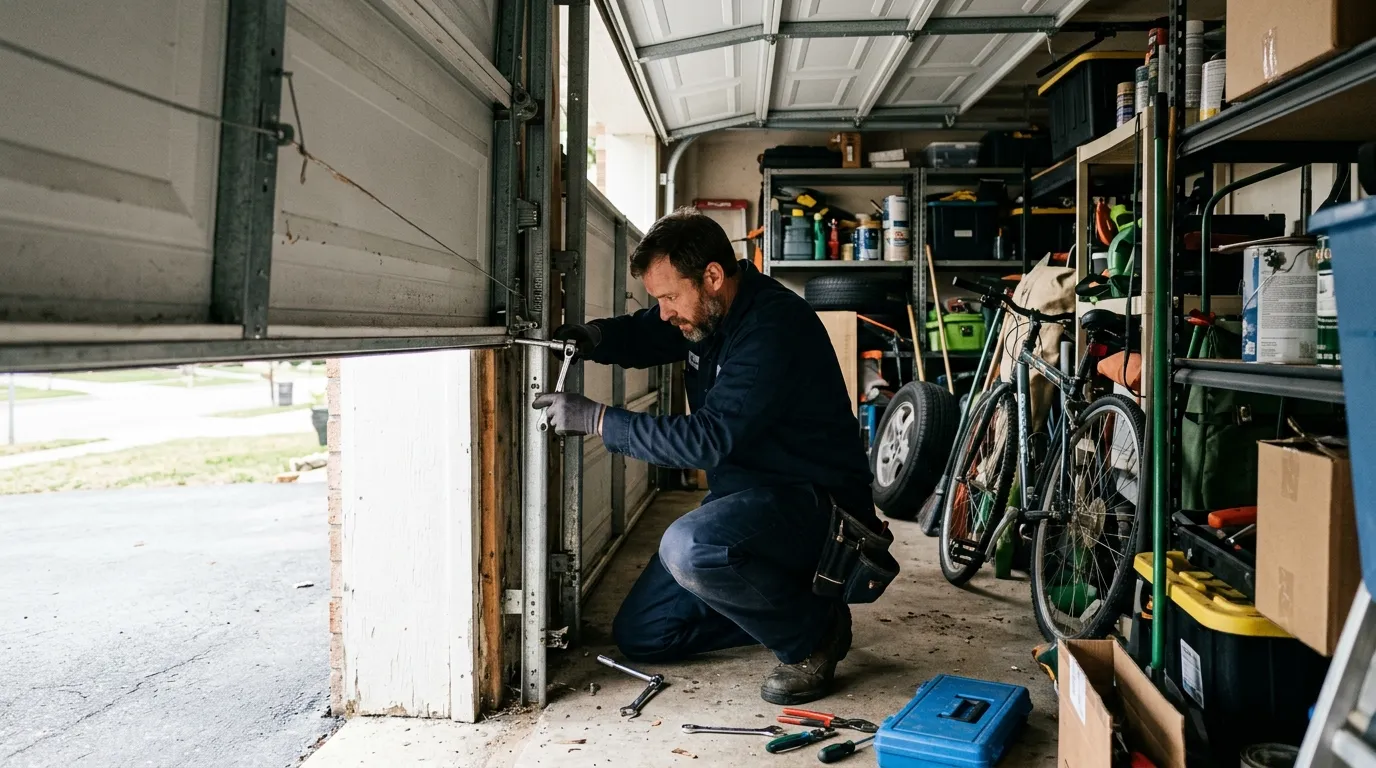
On the truck we carry the extension springs, safety cables, and center brackets that fit the door type standard to houses built through the 1960s and 70s, along with steel rollers and track sections sized for that same era. Torsion conversions and heavier-gauge doors for later construction are also stocked, since the service area's build years run all the way to 2002 and Midwest City itself sits inside that range too, not just at the older end.
What we don't carry is anything custom - a specialty insulated panel or a discontinued opener board from a defunct manufacturer has to be special-ordered, and we'll tell you the lead time on that up front rather than promise a same-visit fix we can't deliver. For the common failures, though - spring, cable, bracket, roller, track - the part is usually already in the truck.
How to Book
Tell us what the door is doing - won't open, opens crooked, makes a specific noise, opener runs but the door doesn't move - and we'll get a sense of the likely part before the truck leaves Oklahoma City. Have the house's approximate age handy if you know it; whether your door predates 1974 or came later matters for what hardware we bring.
We serve Midwest City as part of the wider Oklahoma City area, and you can see the full list of towns we cover on our service area page. For general garage door repair information covering Oklahoma City itself, that's on our main repair page.
Talk to a Midwest City Technician First
Describe what the door is doing and get a straight answer on what it likely needs.
Other Garage Door Services in Midwest City
Recent Work in Midwest City
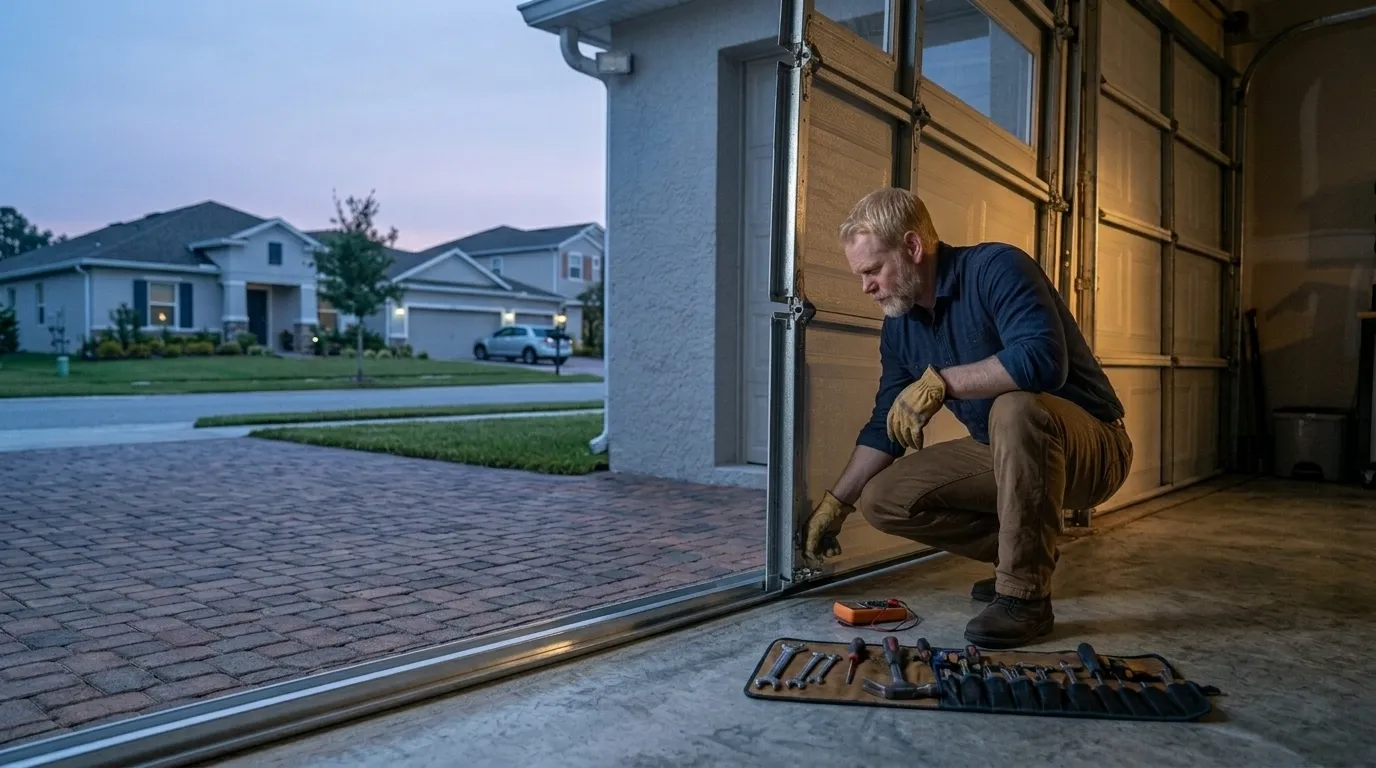
A look at jobs our crew has been on nearby.
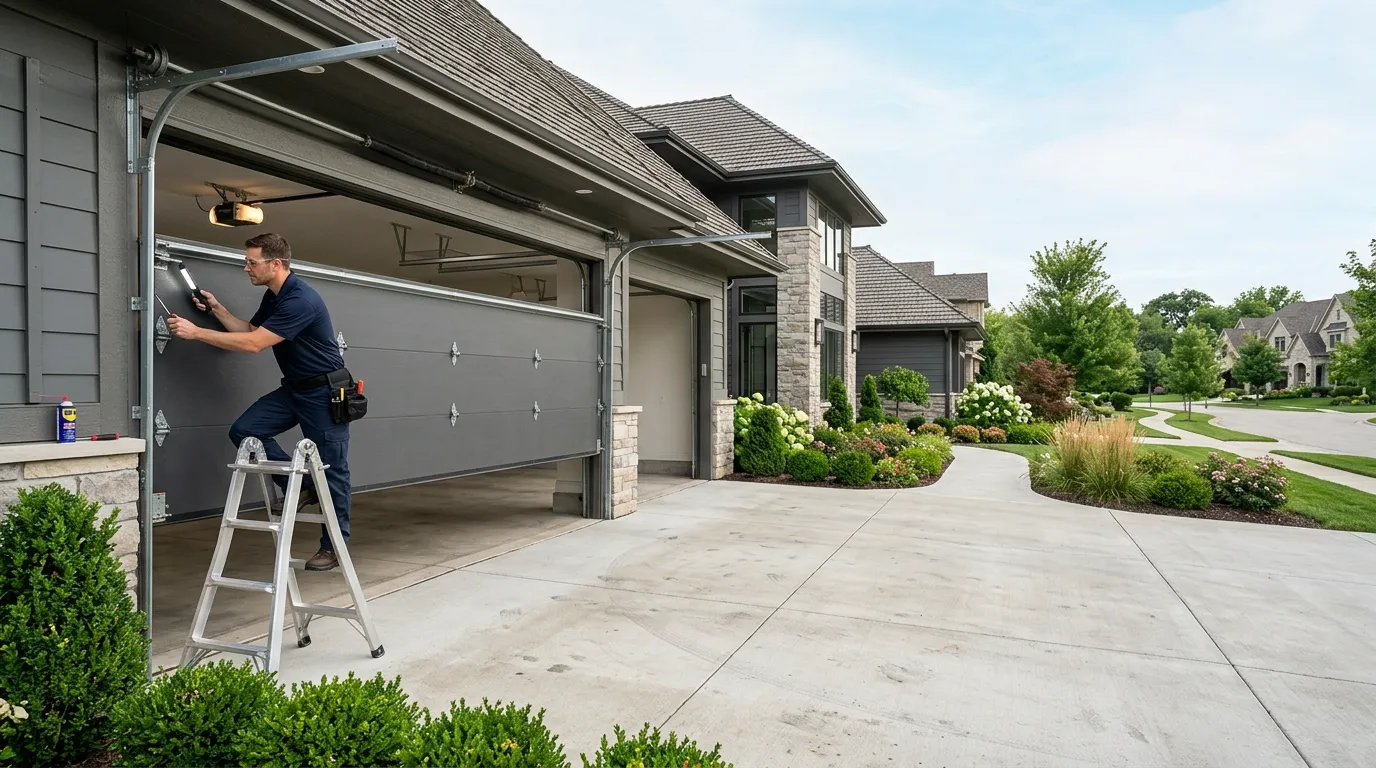
Why Midwest City Calls Us
Frequently Asked Questions
Why does my door still have the old spring style instead of the torsion springs my neighbor's newer house has?
It comes down to when the house was built. Midwest City's housing centers on 1974, and doors from that era typically got extension springs mounted along the horizontal tracks rather than a torsion spring on a center shaft. Unless a prior owner replaced the whole door system, that original setup is often still in place, cables and all.
Is it worth replacing just one spring if only one broke?
No. Extension springs are installed in pairs and age together under the same daily stress. If one snapped, the other is close behind - usually within months, not years. We replace both at once so you're not paying a second service call for a spring that was already worn when we were there the first time.
Do you have a branch in Midwest City?
No. We're based out of Oklahoma City, about eight miles west, and travel to Midwest City for service calls. We don't keep a local depot here, so we won't claim a response time we can't back up - we'll give you a realistic window when you call.
How much should I expect to spend on a spring repair?
We don't quote a number sight unseen because the fix depends on what's actually failed - springs alone, or springs plus a cracked bracket, plus how many cables need replacing. We look at the door first and tell you the cost before starting work, which matters more here given the area's median income runs below the wider service area's.
Need Garage Door Repair in Midwest City?
Call now for straight answers on cost and timing.