
Service
Oklahoma City Garage Door Repair: Springs, Cables, Openers
Oklahoma City homes built between 1959 and 2002 carry original torsion hardware that wears out in cold-moderate swings. We repair springs, cables, openers.
- Licensed & Insured
- Same-Area Service Calls
- Upfront Pricing
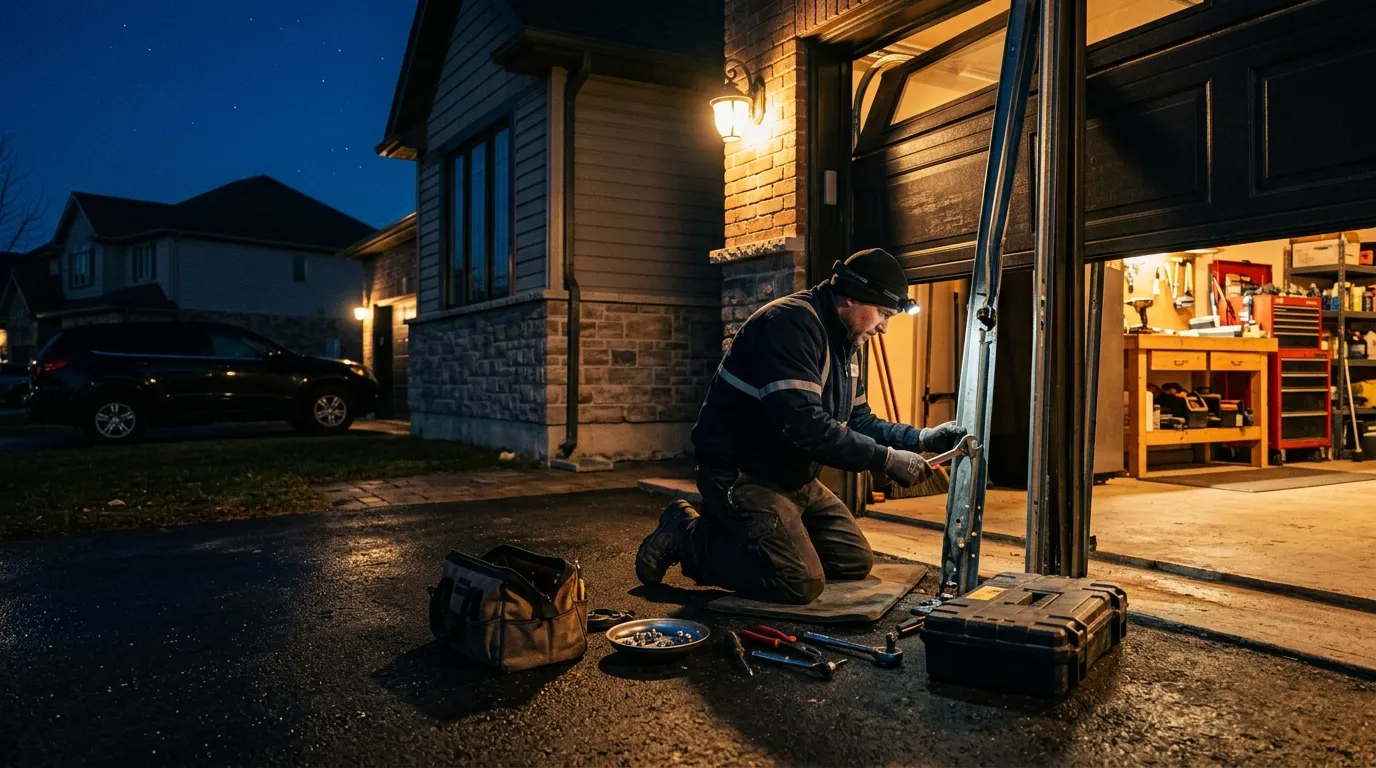
What Happens When You Call
-
1
Call or Request a Quote
Tell us what the door is doing and roughly how old the house is - that alone points us toward the likely part before a truck leaves.
-
2
On-Site Diagnosis
A tech checks the spring, cables, tracks, and opener in person and tells you plainly what is actually wrong.
-
3
Straight Price, No Surprises
You get a number before any work starts. It covers parts and labor, nothing added after the fact.
-
4
Fixed the Same Visit
Most repairs are done in one trip. If a part needs sourcing, we tell you that upfront instead of guessing.
Parts We Carry
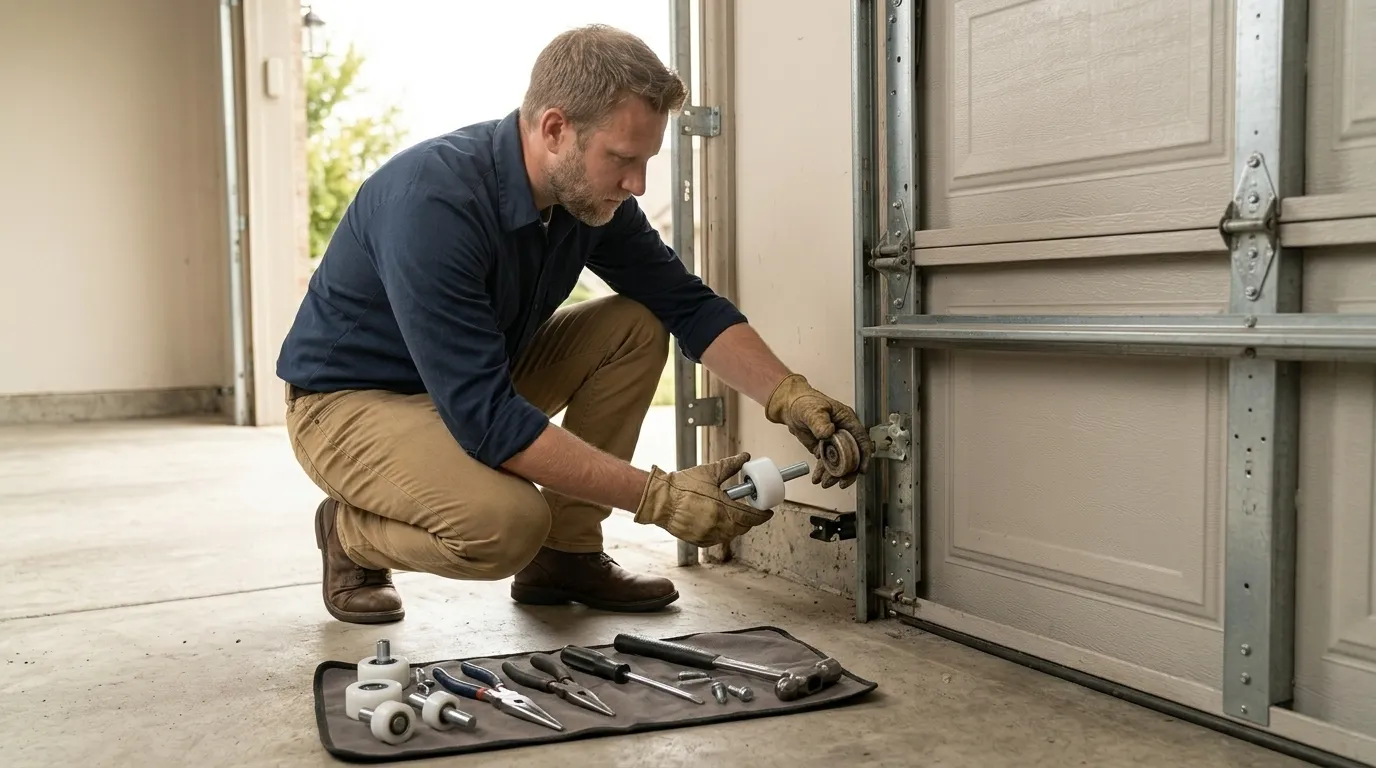
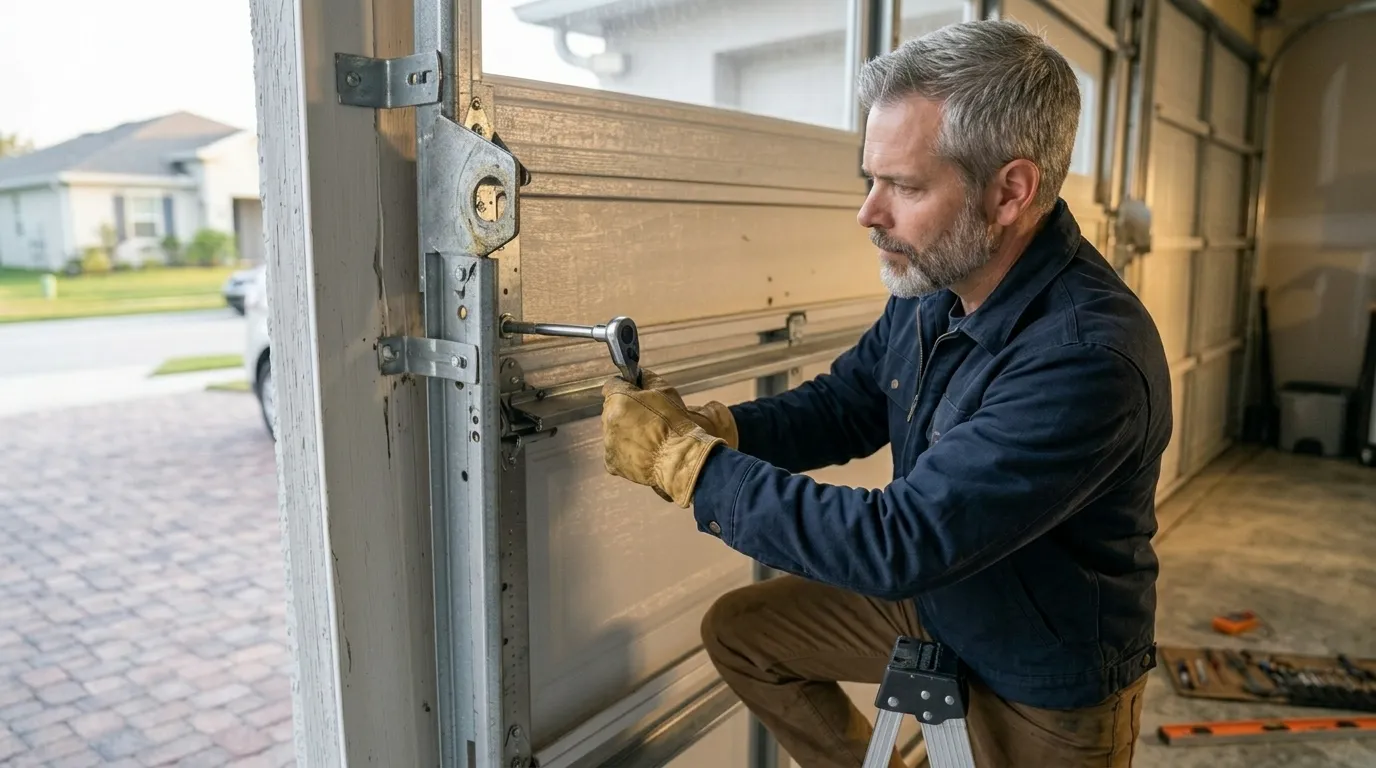
Most of the calls we run in Oklahoma City involve the same handful of parts, because most of the housing stock here dates from 1959 to 2002, with the median build year sitting around 1972. That means a lot of doors are still running on the torsion spring sizes, extension spring pairs, and steel-cable setups that were standard for that era. We stock torsion springs in the wind counts and wire gauges that match those older headers, plus replacement cables, rollers (nylon and steel), hinges, and center and end bearing plates sized for the track hardware from that build window.
On the opener side we carry chain and belt-drive units and the standard safety sensor kits that retrofit onto older track systems without reframing the door. We do not stock every specialty part - custom wood door hardware and a handful of discontinued opener models sometimes mean a short wait on parts, and we'll tell you straight if that's the case instead of guessing at a fix.
If your door is original to a house built in that 1960s-70s stretch, there's a decent chance the spring on it right now is original too, which is its own problem covered in the next section.
Why This Fails Locally
Oklahoma City sits in a cold-moderate climate band, and that matters more to a garage door than people expect. Spring steel doesn't fail because of one cold snap - it fails from the repeated expansion and contraction of temperature swings over years, and a torsion spring installed when your house was framed in, say, 1968 has been through five decades of those swings.
Metal fatigue is cumulative. It's not a defect, it's just what happens to a coil of wound steel that's been flexing under load since before most of us were driving.
Across the 17 areas we work in - from Del City and Forest Park in close to Piedmont and Newcastle further out - the housing age is remarkably consistent, which is why the failure pattern is consistent too. A house built in 1972 in one part of town and a house built in 1975 across town are carrying nearly the same hardware, aged the same number of winters.
That's different from a market where the housing stock spans a hundred years and failures are scattered and random. Here, when one 1970s torsion spring goes, the one on the identical house three doors down is usually not far behind it.
This is also why we see less demand for exotic diagnostics and more demand for straightforward spring and cable replacement - the failure mode repeats because the housing does.
The Symptom
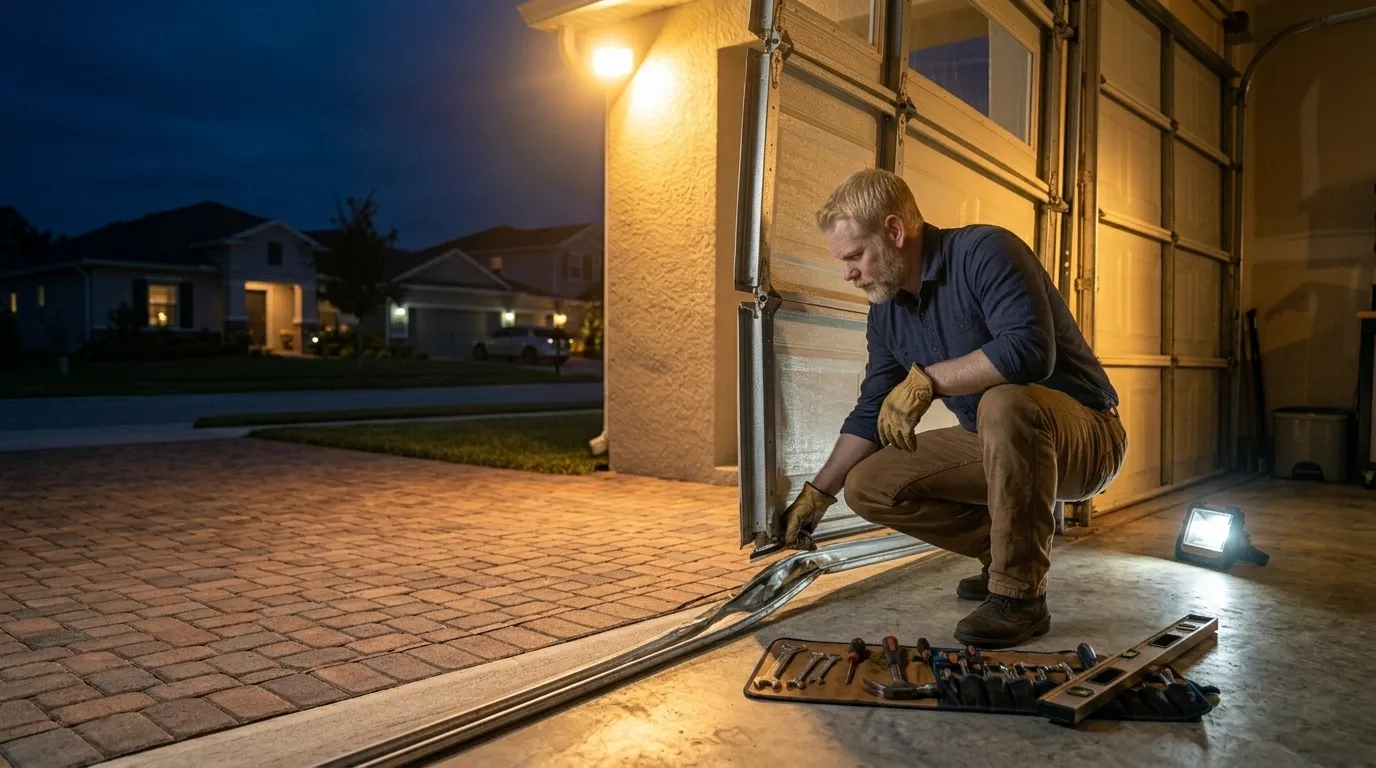
The classic sign is a loud bang from the garage, usually first thing in the morning when the metal is coldest and least forgiving - that's a torsion spring letting go. After that, the door either won't lift at all, or the opener strains and grinds trying to lift a door that's lost its counterbalance. Some owners notice it building for weeks before the snap: the door closing unevenly, one side dropping faster than the other, or a visible gap opening in the coil where the spring's wound.
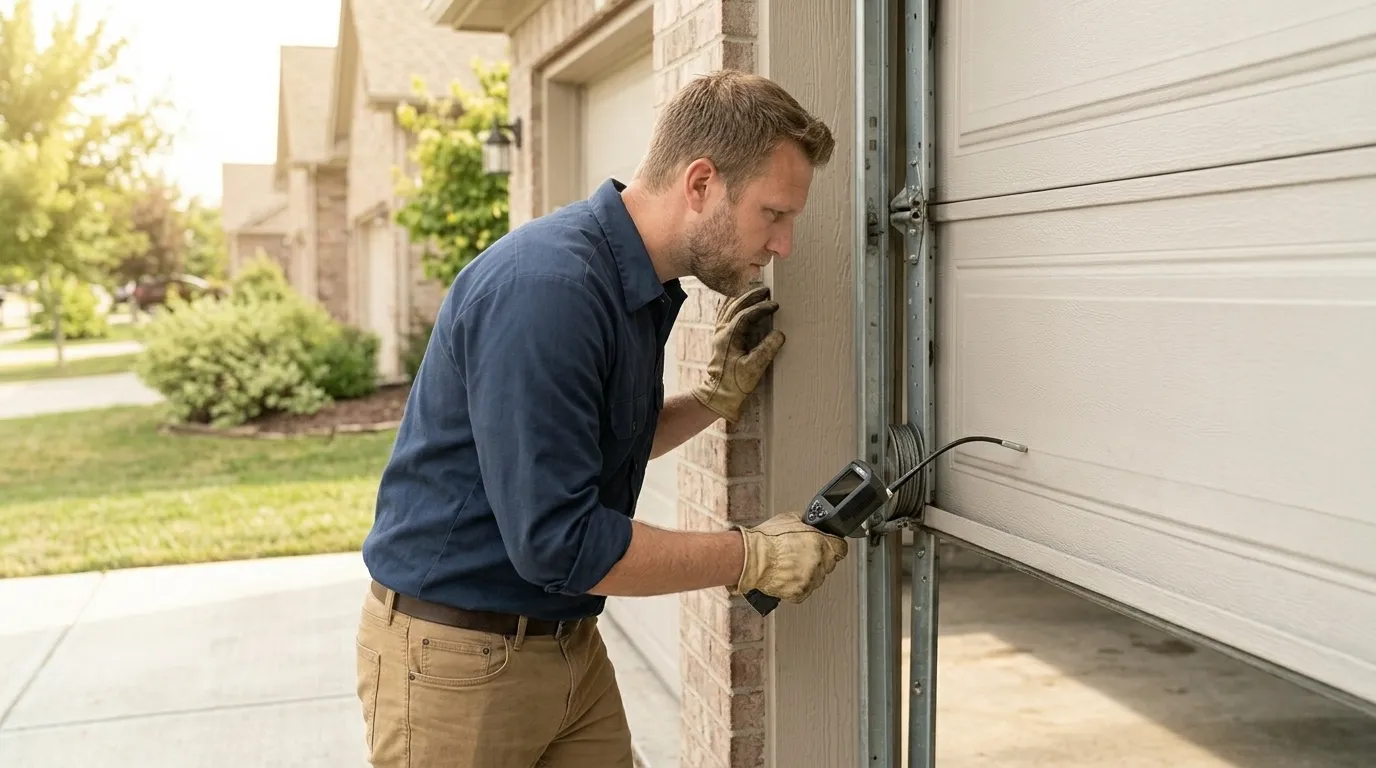
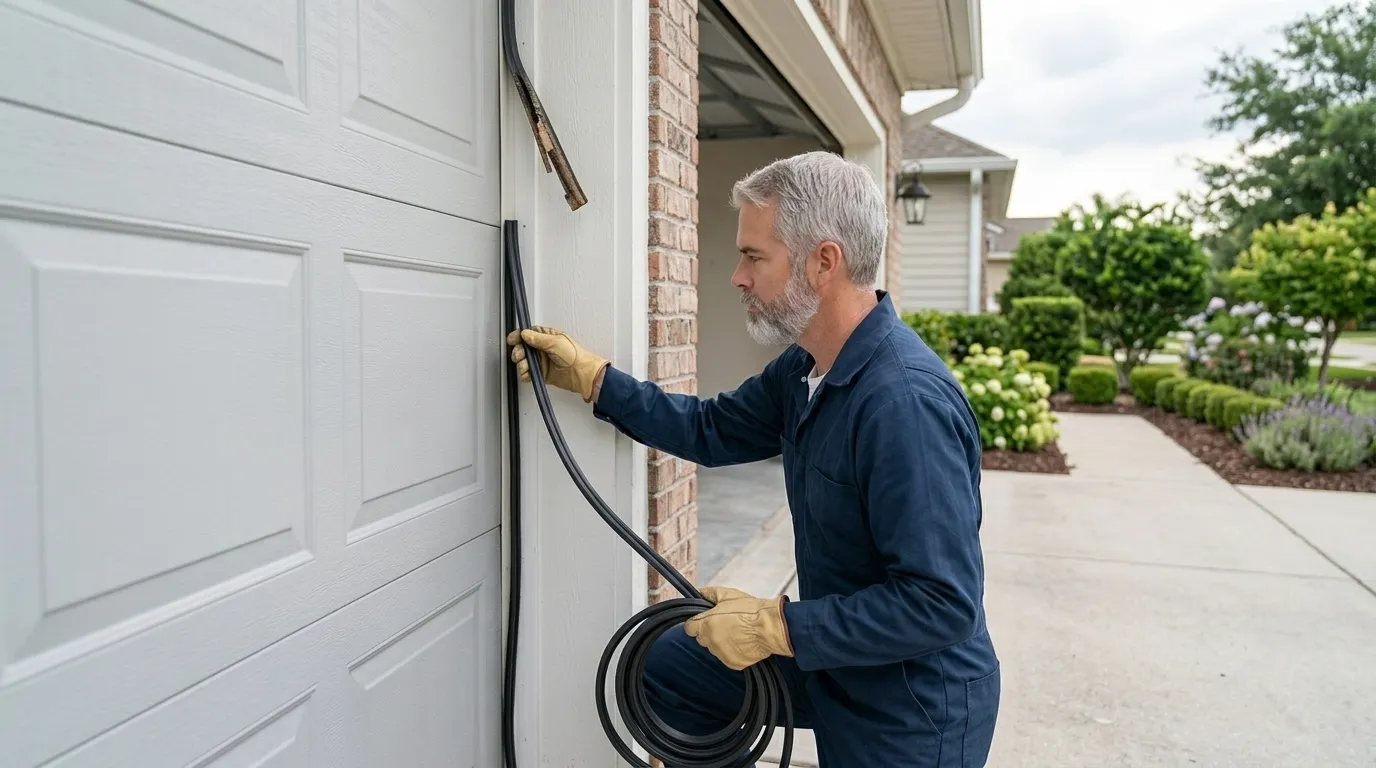
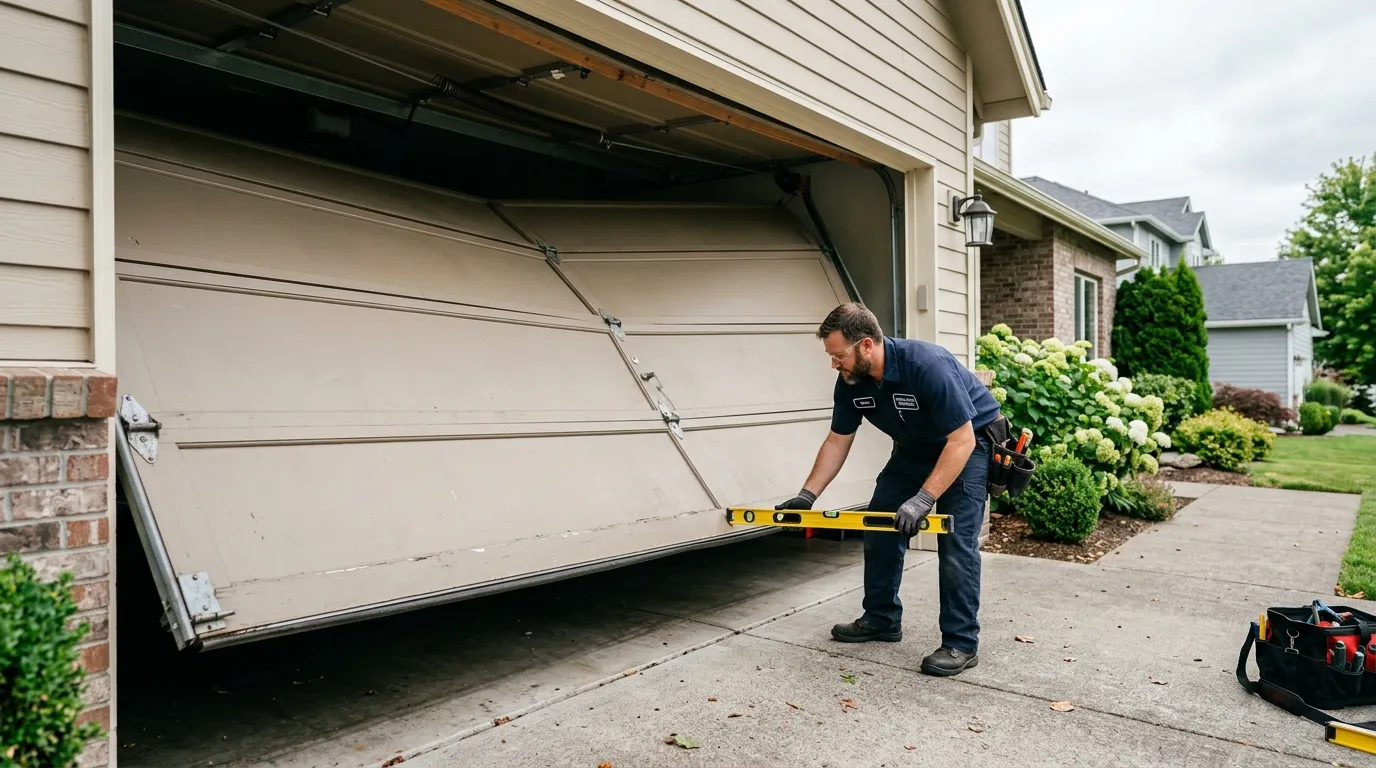
A second, quieter symptom is a cable that's frayed or jumped its drum - you'll see it hanging loose at the bottom bracket, or the door will hang crooked on one side. That's common on the same 1960s-70s doors, since the cable and spring usually reach end of life around the same time.
What we don't recommend: trying to release the tension on a wound torsion spring yourself. That spring is under enough stored force to cause real injury, and it's the one repair on this list where the safe move is always to call rather than watch a video and wing it.
The Cost of This Job
We don't quote a price sight-unseen, because a spring job on a single door and a two-spring job on a heavier double door with a strained opener aren't the same visit, and guessing at it over the phone does nobody any favors. What we can tell you is that across the households we serve - 80,061 of them, with 47,486 owner-occupied houses in the mix - the median household income runs around $75,000, and most of the owners we talk to want the repair done right once rather than patched together every winter.
That's the honest tradeoff on an older torsion system: patching a worn spring with a lighter-duty replacement can save money up front, but if the drums, cables, or bearing plates on a 1970s door are also near end of life, replacing just the spring means you're back out here again within a season or two. We'll tell you when a full hardware refresh makes more sense than a single-part fix, and we'll tell you when it doesn't - not every old door needs everything replaced at once.
Talk to a Technician Before You Book
Describe what the door is doing and get a straight answer on what it likely needs.
Other Ways We Can Help
Jobs Like Yours
Recent work from this service line.
Why Oklahoma City Calls Us
Frequently Asked Questions
Why did my garage door spring break with no warning?
Torsion springs fail from cumulative metal fatigue, not a single event. In a cold-moderate climate like Oklahoma City's, a spring goes through years of expansion and contraction from temperature swings. If your house was built in the 1960s or 70s and the spring is original, it's had five decades of that cycling behind it - the break just looks sudden.
Do you carry parts for older openers?
We stock chain and belt-drive units and standard sensor retrofit kits that fit onto the track hardware common in homes built between 1959 and 2002. Some discontinued opener models or specialty hardware can mean a short parts wait, and we'll say so upfront rather than guess.
Is it safe to release spring tension myself?
No. A wound torsion spring holds enough stored force to cause serious injury if it releases uncontrolled. This is the one repair on an older door where calling for the job is the safer move over attempting it yourself, regardless of how straightforward it looks.
How do I know if it's the spring or the cable?
A spring failure usually announces itself with a loud bang and a door that won't lift. A cable problem tends to show up as a door hanging crooked on one side or a cable visibly loose or frayed at the bottom bracket. On 1960s-70s doors, both often wear out around the same time.
Need Oklahoma City Garage Door Repair: Springs, Cables, Openers?
Call now for straight answers on cost and timing.