
Oklahoma City Garage Door Guide
What Your Garage Door Is Telling You in Oklahoma City
A guide to what grinding, popping, and slamming garage door noises mean in Oklahoma City homes, tied to local housing age and the area's cold-moderate climate swings.
- Licensed & Insured
- Same-Area Service Calls
- Upfront Pricing
What Is Going On
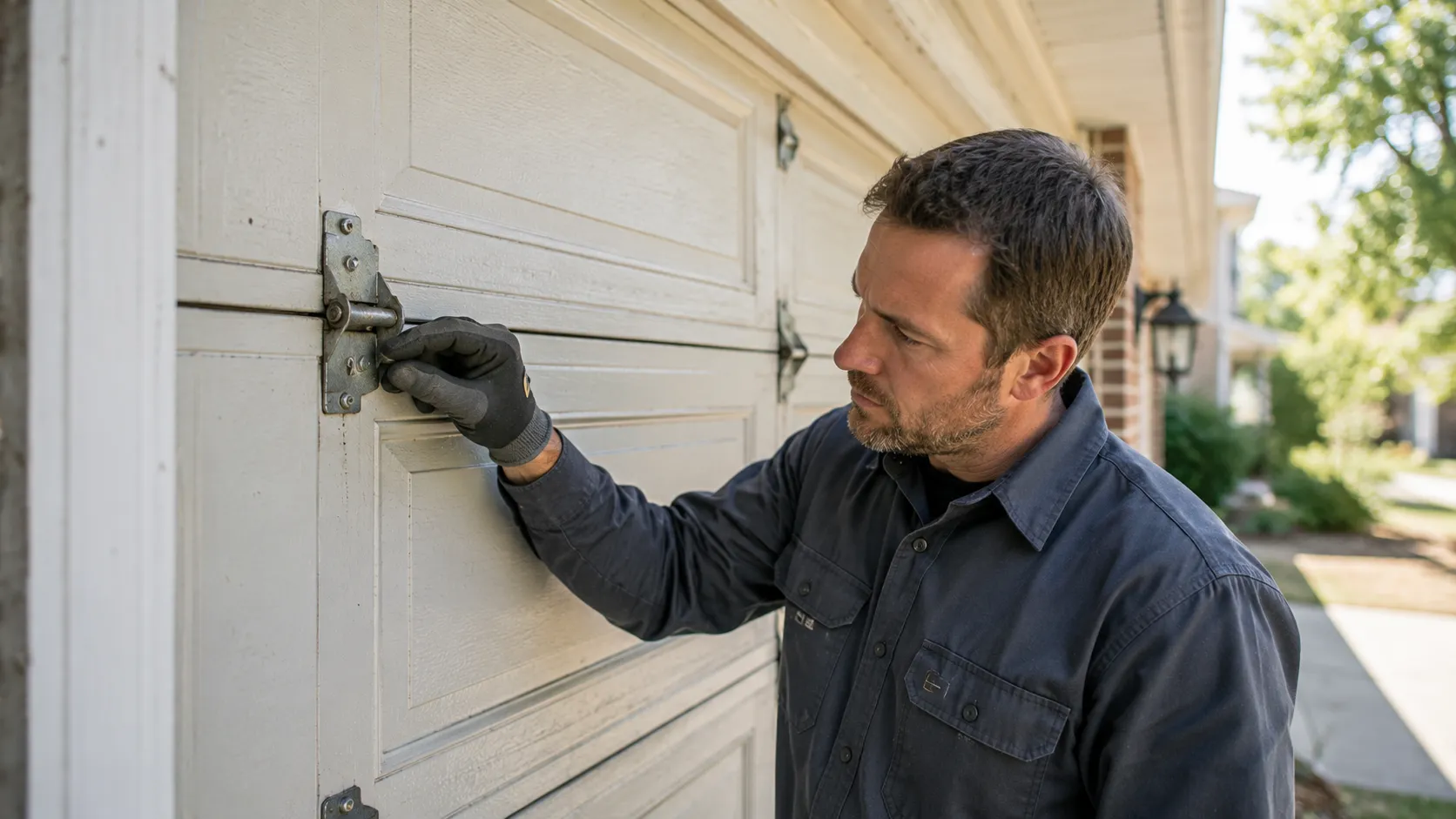
Most houses across this service area went up between 1959 and 2002, with the median landing around 1972. That matters because a door built or replaced during that stretch usually still runs on the hardware that came with it - steel torsion springs, stamped rollers, sometimes the original galvanized track. When that hardware starts talking, it's not random.
A rhythmic thump on the way up almost always means a roller has worn flat inside its stem, which is common on doors that have logged fifty years of cycles. A sharp bang followed by the door refusing to move is a spring letting go, and on a torsion setup that's a two-person job, not a weekend fix. Grinding that gets worse over weeks, not days, points to a bearing plate or the shaft itself wearing at the center bracket.
Rattling panels usually mean loose hinge bolts, not a structural problem, but on a door old enough to have shrunk or warped slightly, that rattle can mask a bigger alignment issue in the track. The point is that the noise is diagnostic information, not background annoyance, and on a house from this era it's telling you something specific about parts that have been working since before most warranties existed.
The Cost of This Job
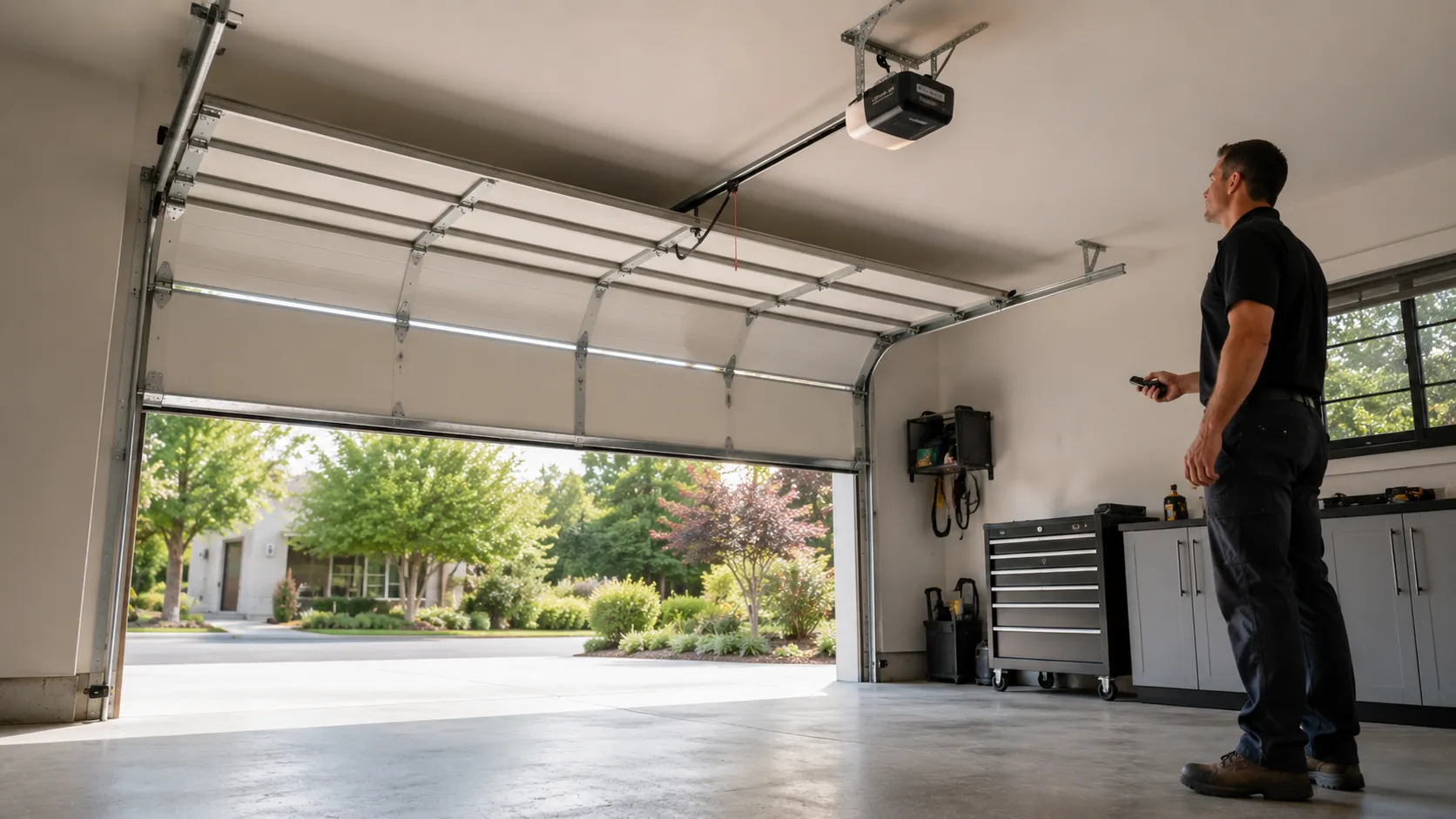
We don't have a set price to hand you here, and honestly anyone who quotes one over the phone before seeing the door is guessing. What we can say is how the decision usually breaks down for owners in this area. With a median household income around $75,000 across the roughly 80,000 households we serve, most people we talk to are weighing a targeted repair - a spring, a set of rollers, a new opener gear - against paying for a full door replacement they didn't plan for.
On a door that dates to the 1972 median build year for this area, replacing one worn part often makes more sense than swapping the whole unit, as long as the track and panels are still square. Where it stops making sense is when the springs, rollers, and opener are all failing around the same time, which happens on doors that have never had anything replaced. At that point you're paying for labor twice instead of once.
We'll tell you straight which situation you're in before we start work, not after.
How Local Conditions Play In
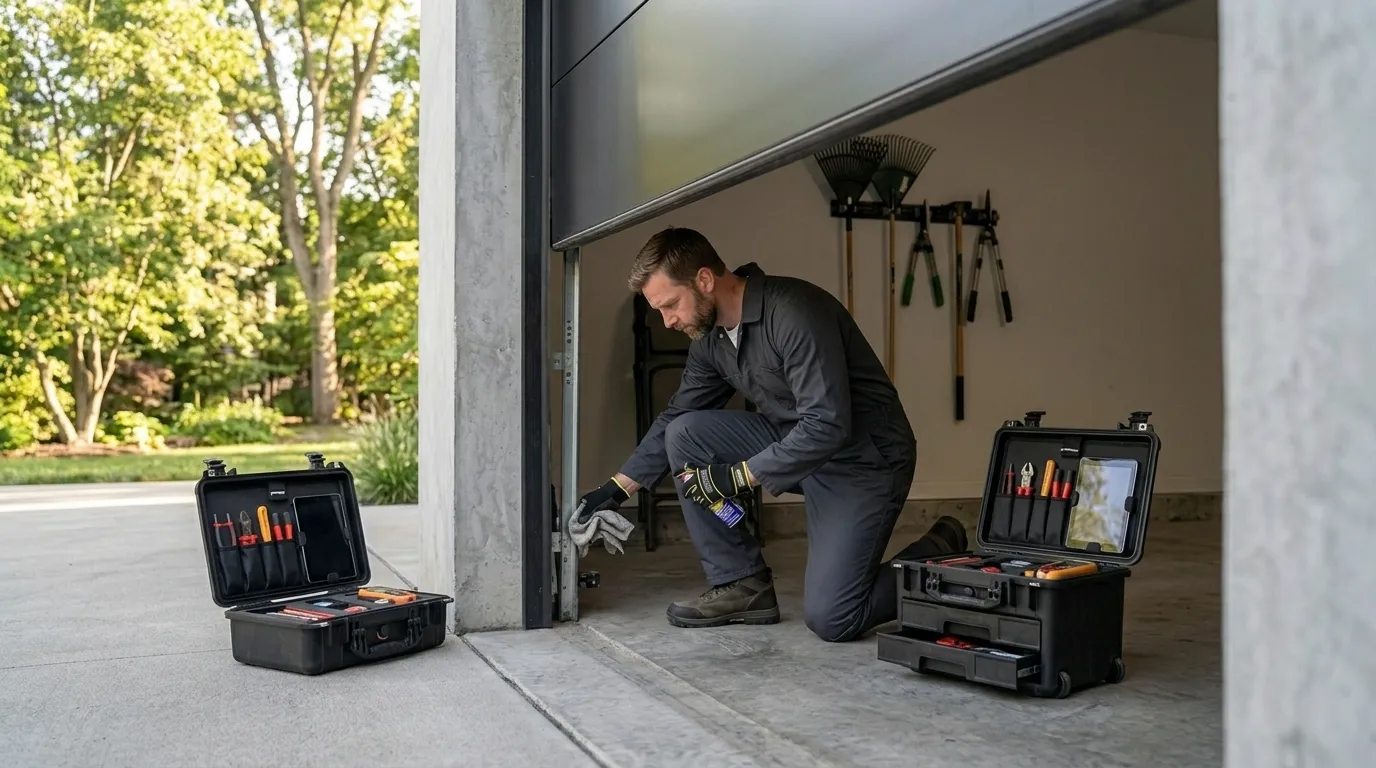
Oklahoma City sits in a cold-moderate climate band, which sounds mild until you think about what that swing actually does to steel over a year. Summer here pushes the metal track and spring coils to expand under heat, and winter cold snaps contract that same steel fast enough to change the tension on a torsion spring almost overnight. Doors that were fine in October start binding or making a new noise in January, and it's not because anything broke - it's because the hardware is reacting to a temperature range that a lot of garage door parts weren't engineered around when they were installed in the 1960s and 70s.
Lubricant that worked fine at 75 degrees gums up or thins out at the extremes, which is why a door that squeaks in summer heat and groans in a hard freeze is often the same underlying issue showing up two different ways. If your door has started making noise specifically at the start of a cold snap, that timing is worth mentioning when you call - it points us toward the spring and track before we even open the panel.
Where People Go Wrong
The most common mistake we see is spraying WD-40 on a noisy roller and calling it fixed. It quiets things down for a week, sometimes two, and then the noise comes back louder because the lubricant attracted dust instead of protecting the metal. On hardware from the 1960s and 70s stock that makes up most of this area, that delay just means the roller keeps grinding against its worn spot a little longer before it needs replacing anyway.
The second mistake is ignoring a slamming door because it still closes. A door that drops the last foot instead of settling is usually losing spring tension, and that's the kind of thing that turns into a snapped cable, not less of a problem. Third, people try to adjust torsion spring tension themselves.
We won't walk anyone through that over the phone - a torsion spring under load can cause a serious injury, and that's not a corner worth cutting on a door that's been running since the Nixon administration. If your door is making noise, get it looked at before it stops working instead of after.
How We Can Help
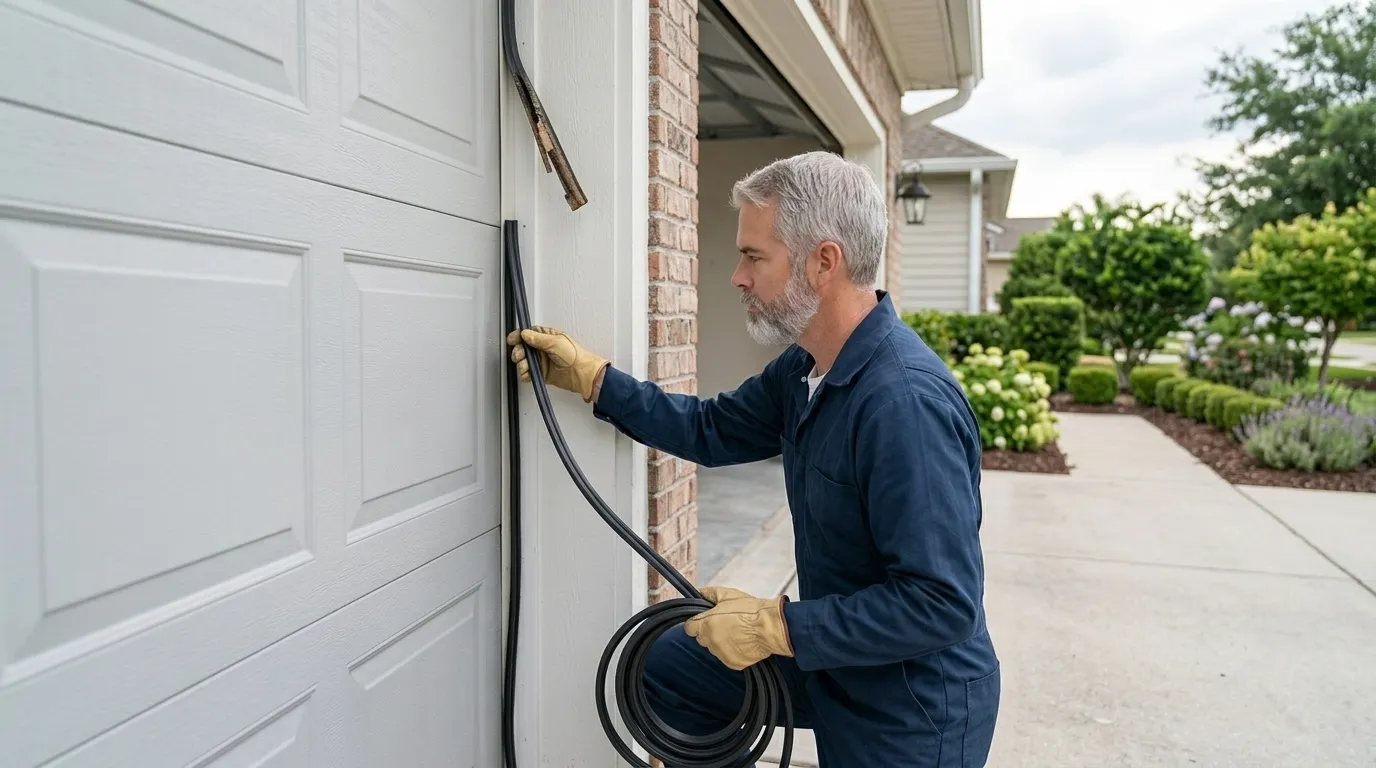
Garage Door Repair
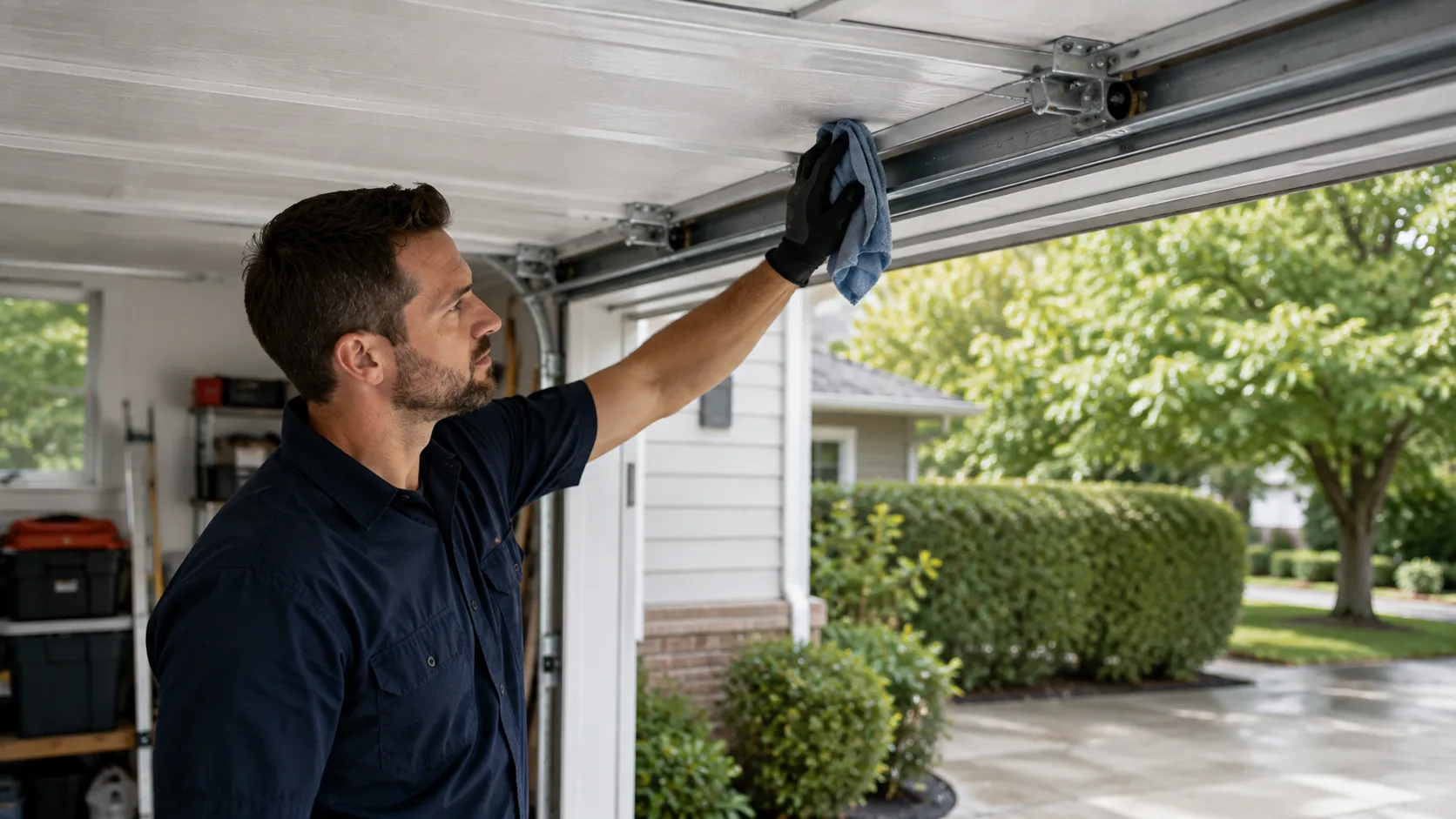
Springs, cables, tracks, rollers, and openers fixed by a tech who explains the problem before touching anything.
Learn more →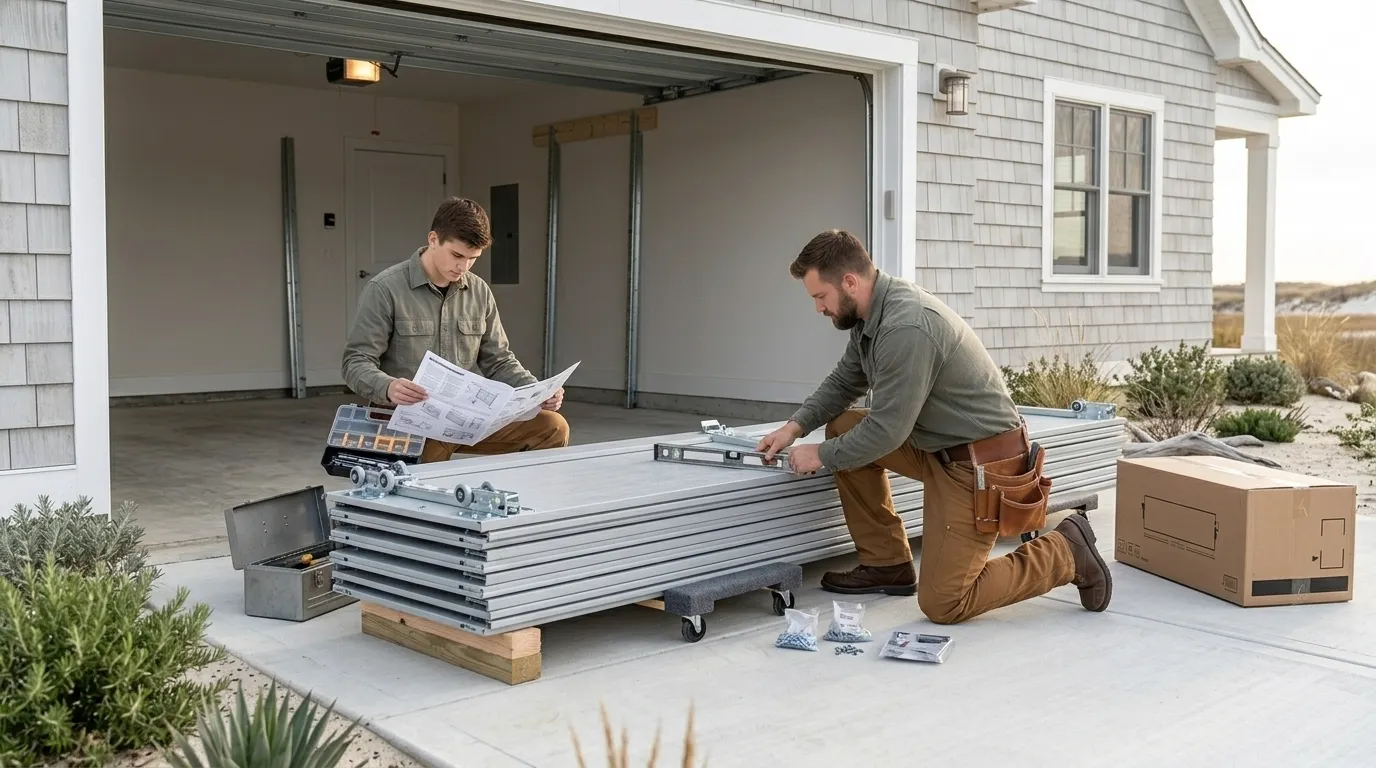
Garage Door Installation
New sectional doors sized and installed for the housing stock actually built in this area.
Learn more →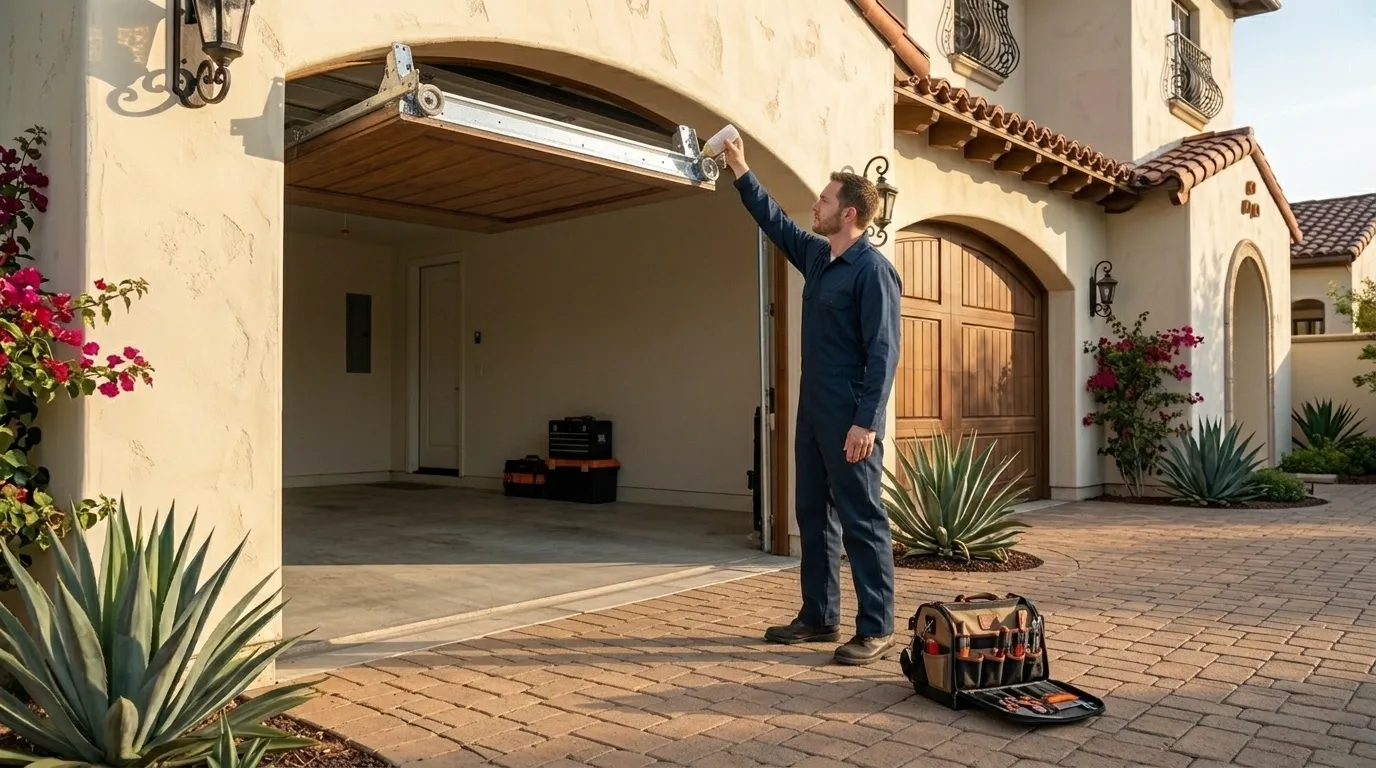
Garage Door Service
Tune-ups, lubrication, and safety checks that catch a small problem before it becomes a service call.
Learn more →Frequently Asked Questions
My garage door is grinding but still opens fine, do I need to worry?
Yes, worth checking soon. Grinding usually means a roller or bearing is worn, and on hardware from the 1960s-90s common in this area, that wear doesn't reverse. It'll keep working until it doesn't, often at an inconvenient moment. Catching it while the door still opens is cheaper than catching it after a roller jumps the track.
Why does my door get noisier in winter?
Oklahoma City's cold-moderate climate means real temperature swings between summer heat and winter cold snaps, and steel springs and track react to that by changing tension. A door that's quiet in October can start groaning in January without anything actually breaking - it's the metal responding to the cold.
Is it normal for an original door from the 1970s to still be running?
It's common here since a lot of this area's housing dates to that period, but common isn't the same as trouble-free. Original hardware from that era has usually outlived its rated cycle count on springs and rollers, so noise on a door that old is more likely to mean real wear than on a newer installation.
Have a Door That Needs a Second Opinion?
Call and describe what it is doing - we will tell you what it likely is.