
Oklahoma City Garage Door Guide
What a Garage Door Service Call Actually Covers
A look at what happens when a tech shows up to your Oklahoma City home, tied to the 1960s-70s housing stock and cold-but-moderate winters here.
- Licensed & Insured
- Same-Area Service Calls
- Upfront Pricing
What Is Going On
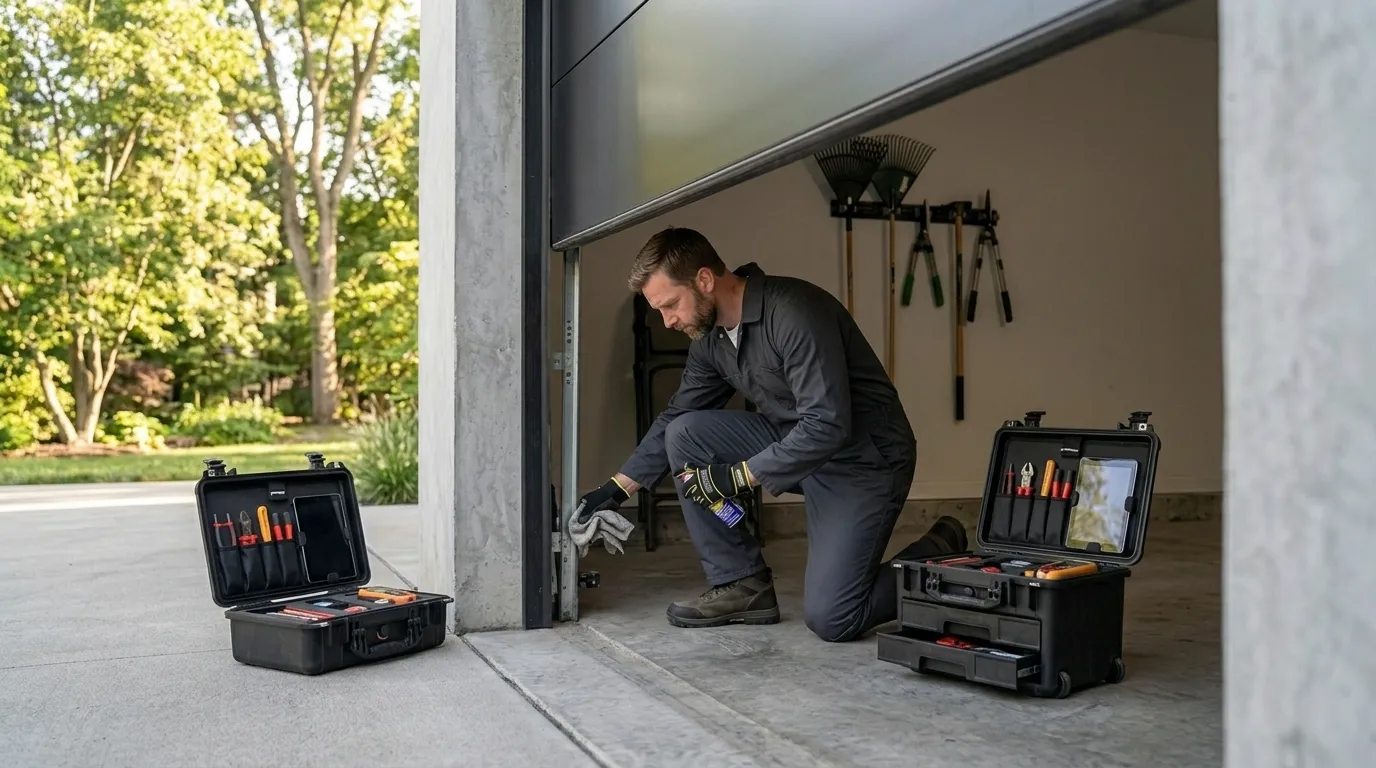
When you call us, the tech isn't guessing at what's behind your garage door panel. Most houses across the 17 areas we work in - from Capitol Hill to Britton to Quail Creek - went up between 1959 and 2002, with the bulk of that stock dating to the 1960s and '70s. That matters because a door built in that window usually runs on a torsion spring system that's outlived its rated cycle count, hardware that's been repainted over rust more than once, and an opener that's had at least one replacement already.
A service call starts with the tech walking the track, checking spring wind, and testing the balance by hand before anything gets a wrench on it. If your house sits in one of the newer pockets near Mustang or Newcastle, the door might still be original to a build in the 1990s or 2000s - different problem, usually less wear, sometimes a warranty question instead of a repair one. Either way, the first 10 minutes of a visit is diagnosis, not sales.
We tell you what's actually wrong, not just what's convenient to replace. A lot of what looks like an opener failure is really a spring or cable issue upstream of the motor, and sorting that out before touching the opener saves a callback.
The Cost of This Job
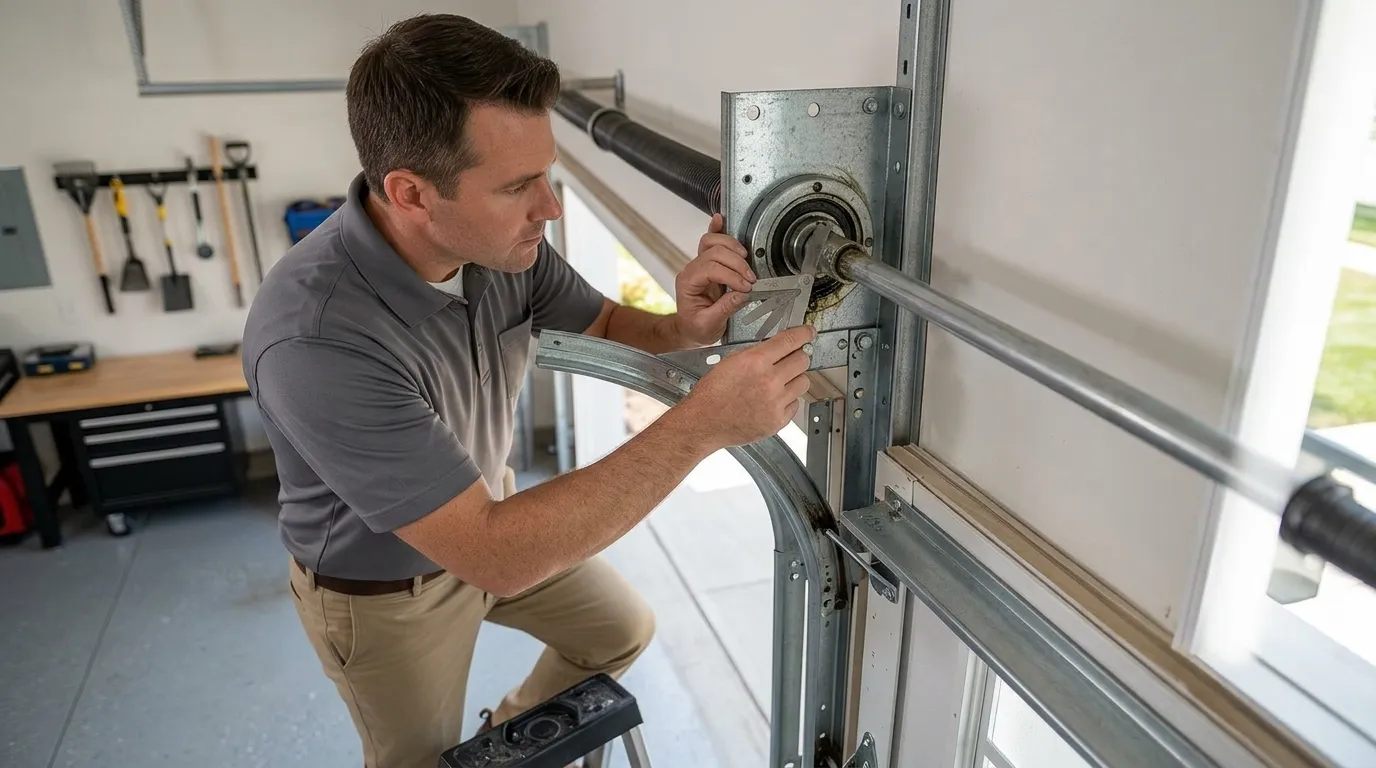
We don't have a set price to quote you here, and we're not going to make one up. What we can tell you is what drives the number up or down. A house built in the early part of our 1959-2002 range is more likely to need full hardware replacement - track, rollers, cables - rather than a single part swap, because everything on the door has aged at once.
Newer builds nearer the top of that range tend to need one thing fixed, not five. Income and household size aren't why a repair costs what it costs, but they do explain why we see a mix of full-replace jobs and single-part fixes across the same afternoon: this is a service area of roughly 80,000 households, most of them owner-occupied, spanning houses from the 1960s through the early 2000s. That spread means no two calls look alike, and it's part of why we walk the door before naming a number instead of pricing over the phone.
How Local Conditions Play In
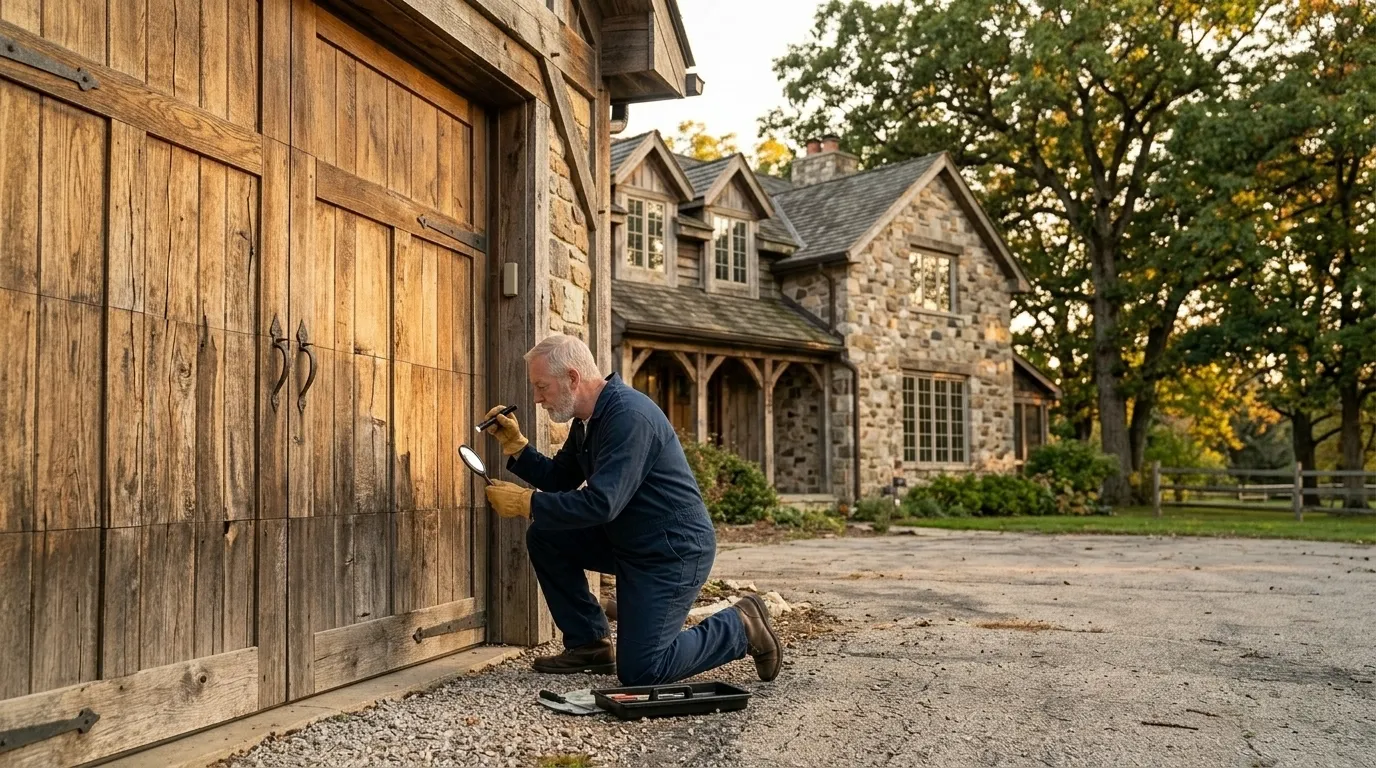
Oklahoma City sits in a cold-moderate climate band, which is a different problem than either extreme heat or hard freeze towns. It means steel doors and torsion springs here go through real temperature swings across a year without the deep-freeze cycling that cracks hardware further north. What that does instead is speed up lubricant breakdown and let condensation sit in track channels during shoulder-season swings, which shows up as rollers that squeal in October and bind in February on the same door.
On a house from our 1960s-70s core, that's compounding on top of hardware that's already 50-plus years old. We check for rust at the track brackets and the bottom roller brackets specifically, because that's where moisture collects on older builds. This isn't a town where we're pulling ice-jammed doors off the ground every winter, so we don't push heavy-duty cold-weather kits as a default add-on - that would be a solution to a problem this climate band doesn't really give you.
Where People Go Wrong
The most common mistake we see on service calls in this area is homeowners replacing an opener when the actual failure is a spring that's lost tension. On a house from the 1960s or '70s, the opener is often the newer part - it's been swapped once already - while the original torsion spring is still doing the work and finally giving out. Swapping the opener doesn't fix that; the new opener just struggles against the same bad spring and fails faster.
The other pattern: waiting until a cable snaps to call, instead of catching the fraying at a bracket during a routine look. We'll say plainly that not every old door is worth saving - if the track is bent in more than one place and the panels are original steel from the earlier end of our 1959-2002 range, replacement is usually the honest answer over another patch repair.
How We Can Help
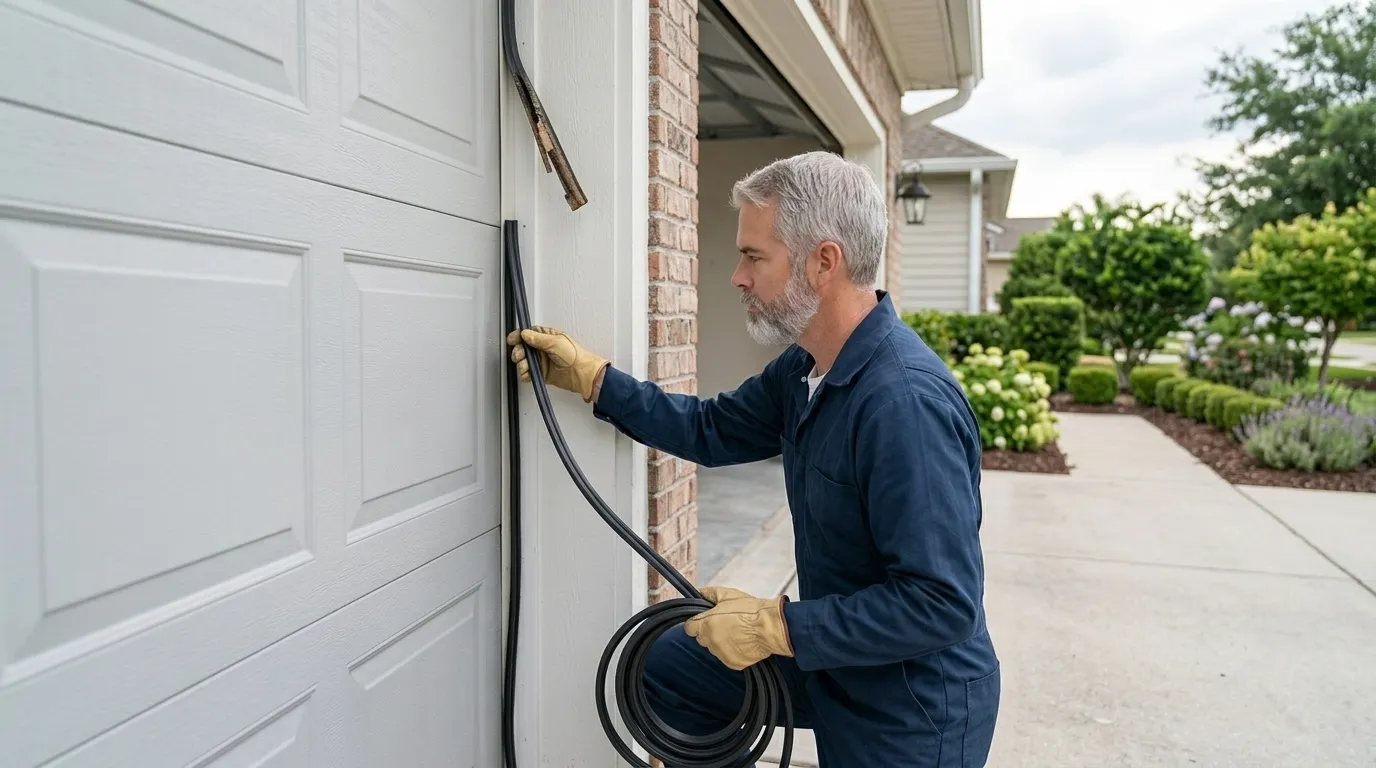
Garage Door Repair
Springs, cables, tracks, rollers, and openers fixed by a tech who explains the problem before touching anything.
Learn more →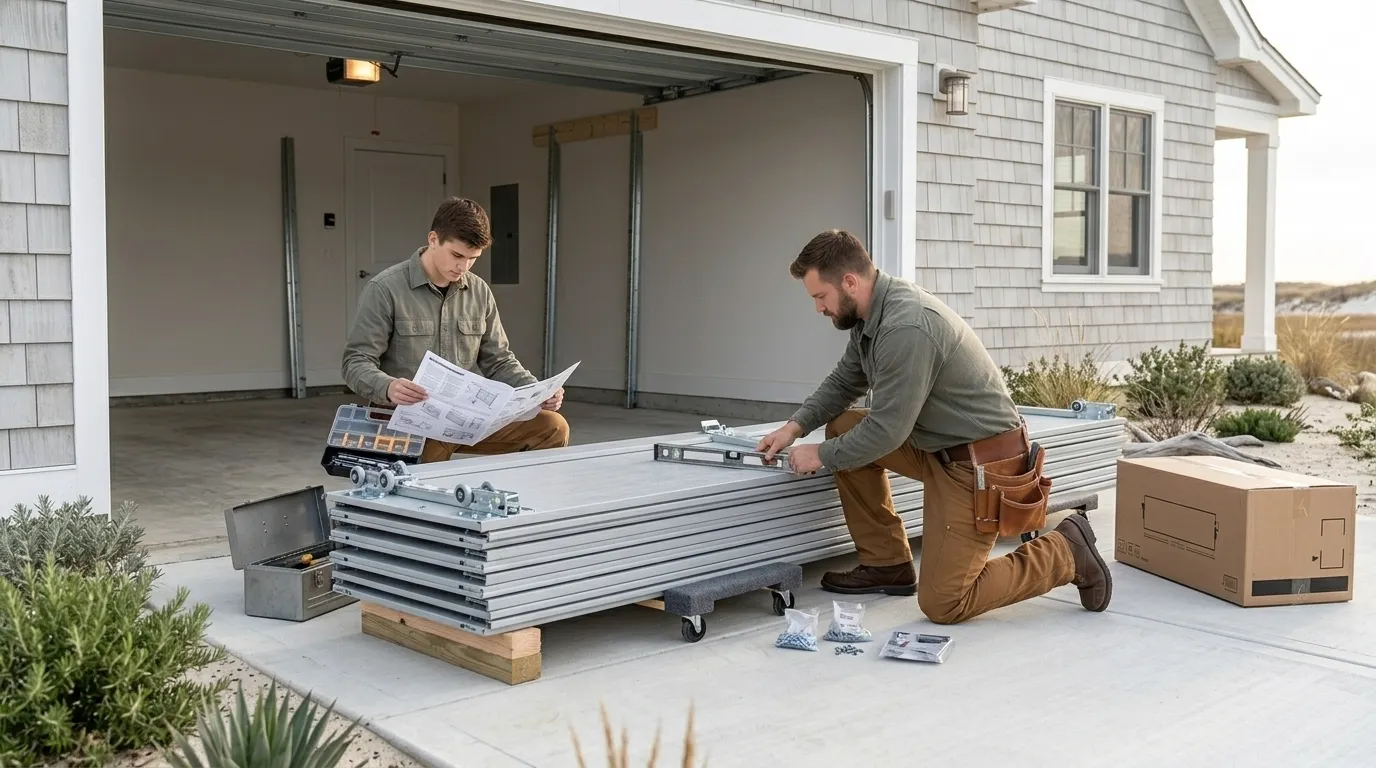
Garage Door Installation
New sectional doors sized and installed for the housing stock actually built in this area.
Learn more →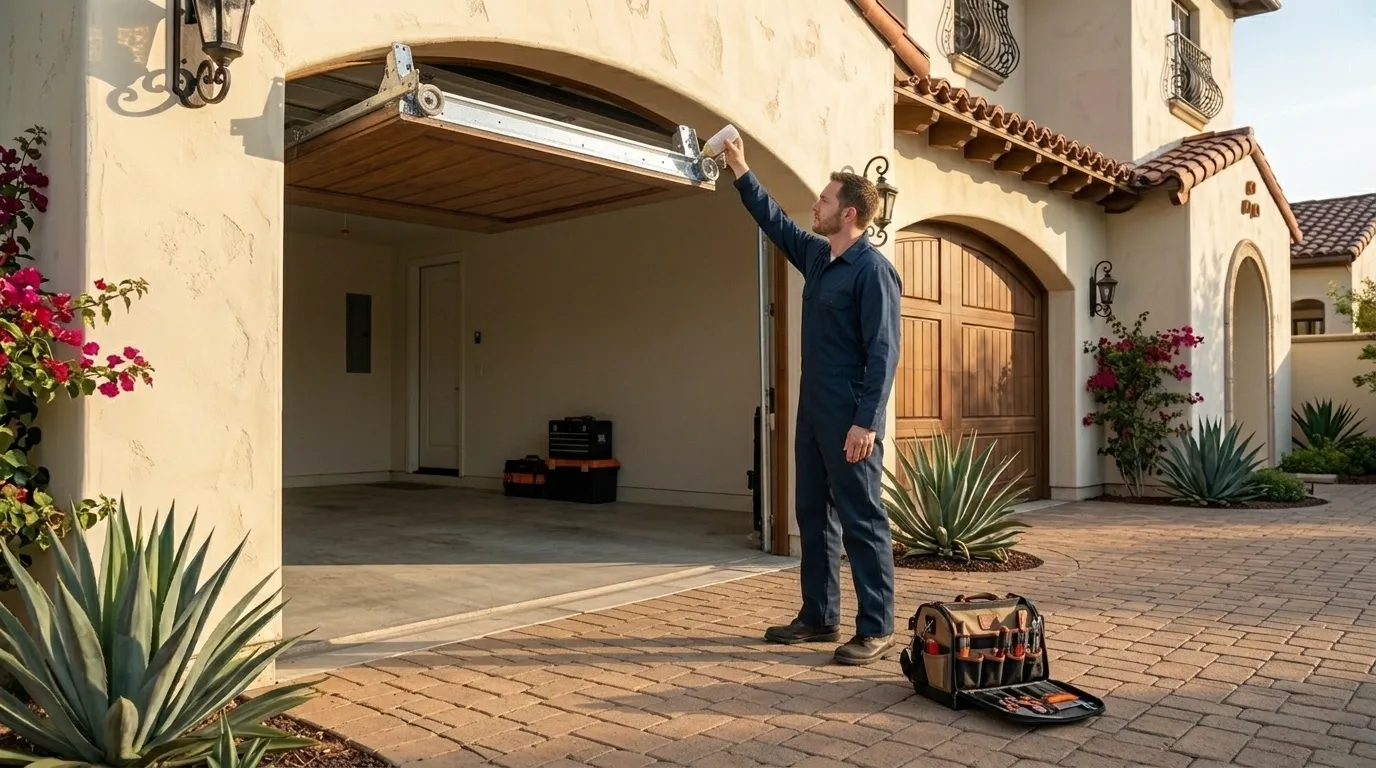
Garage Door Service
Tune-ups, lubrication, and safety checks that catch a small problem before it becomes a service call.
Learn more →Frequently Asked Questions
Is my opener or my spring the actual problem?
On older Oklahoma City houses, the opener has usually been replaced at least once already while the original torsion spring is still in service. If the door feels heavy to lift by hand with the opener disconnected, that's the spring, not the motor. We check spring tension before touching opener wiring on every call.
Do you charge extra for winter calls here?
Oklahoma City sits in a cold-moderate climate band, not a hard-freeze zone, so we don't run seasonal cold-weather surcharges or push winterizing kits as a default. What we do check in colder months is rust at track brackets, since condensation cycling is the bigger issue here than ice.
My house is from the 1970s - should I expect a full hardware replacement?
Often, yes. Houses from that decade are common across this service area, and by now the track, rollers, and cables have usually aged out together, not just one part. A tech will check balance and hardware condition on-site and tell you honestly whether it's a single fix or a full hardware job.
How do you decide repair versus replacement?
We look at how many separate things are failing at once. A single worn part on an otherwise sound door gets fixed. A door with a bent track, aged panels from the older end of our area's 1959-2002 building range, and a failing spring usually isn't worth patching piece by piece - we'll tell you when replacement is the better call.
Have a Door That Needs a Second Opinion?
Call and describe what it is doing - we will tell you what it likely is.