
Oklahoma City Garage Door Guide
What Actually Knocks a Garage Door Off Track Here
Learn why garage doors go off track in Oklahoma City homes built between 1959 and 2002, how cold-moderate winters worsen it here, and what the fix costs.
- Licensed & Insured
- Same-Area Service Calls
- Upfront Pricing
What Is Going On
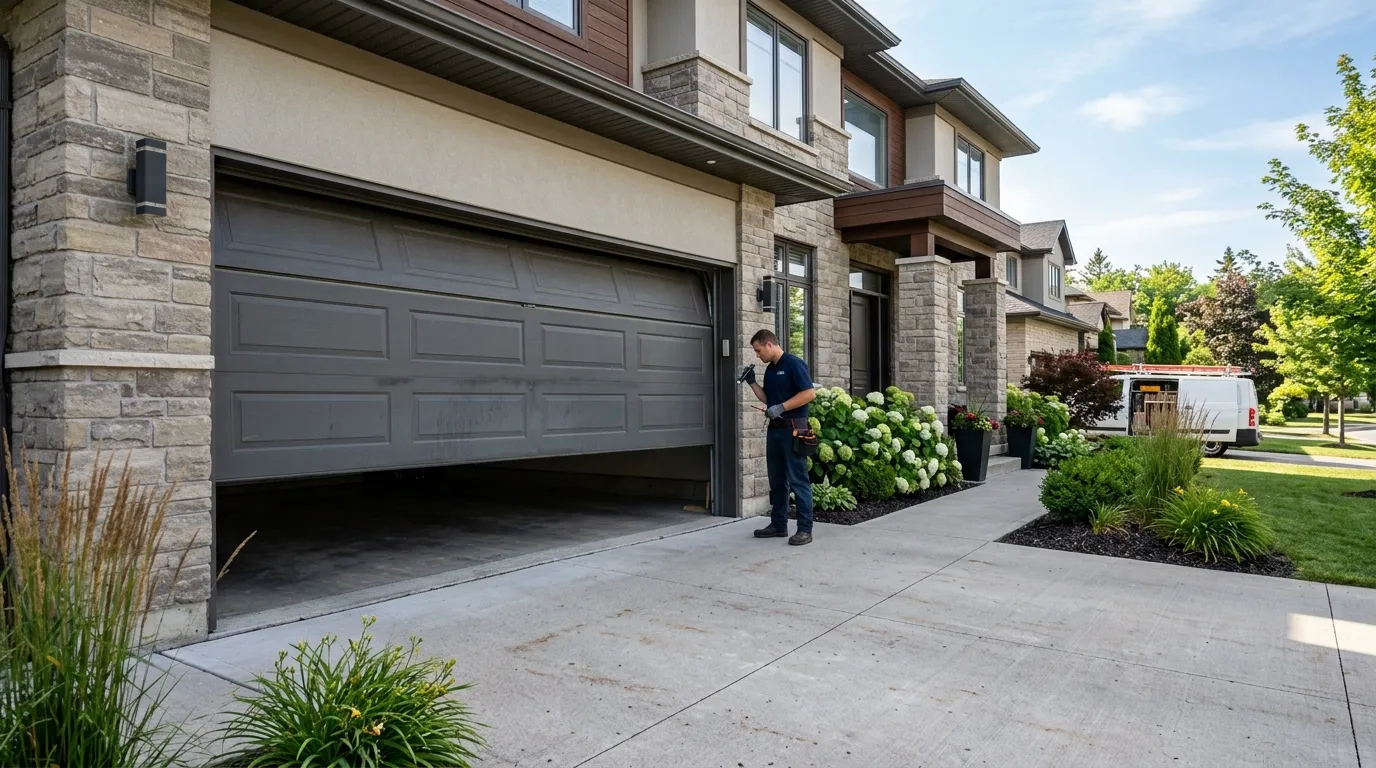
A door doesn't jump its track for no reason. Nine times out of ten it's a track bracket that's worked loose from the framing, a roller that's worn down to a nub, or a cable that's frayed enough to let one side of the door drop faster than the other. Once one side is even a half-inch low, the rollers on that side start riding the edge of the track instead of the channel, and it grinds a little more every time you open it.
What makes this common across Oklahoma City is the age of the hardware still in the walls. Housing across the service area's 17 mapped neighborhoods was mostly built between 1959 and 2002, with the typical build year sitting around 1972.
That means a lot of homes still have the original steel track and the original bracket lag bolts, which have had five decades to loosen against wood jambs that have shrunk and swelled with every season. A track that was true in 1972 isn't necessarily true now.
We do see doors that jump track from a single hard hit - a car bumper, a basketball, a kid on a bike - but that's a different repair than the slow drift most calls turn out to be.
The Cost of This Job
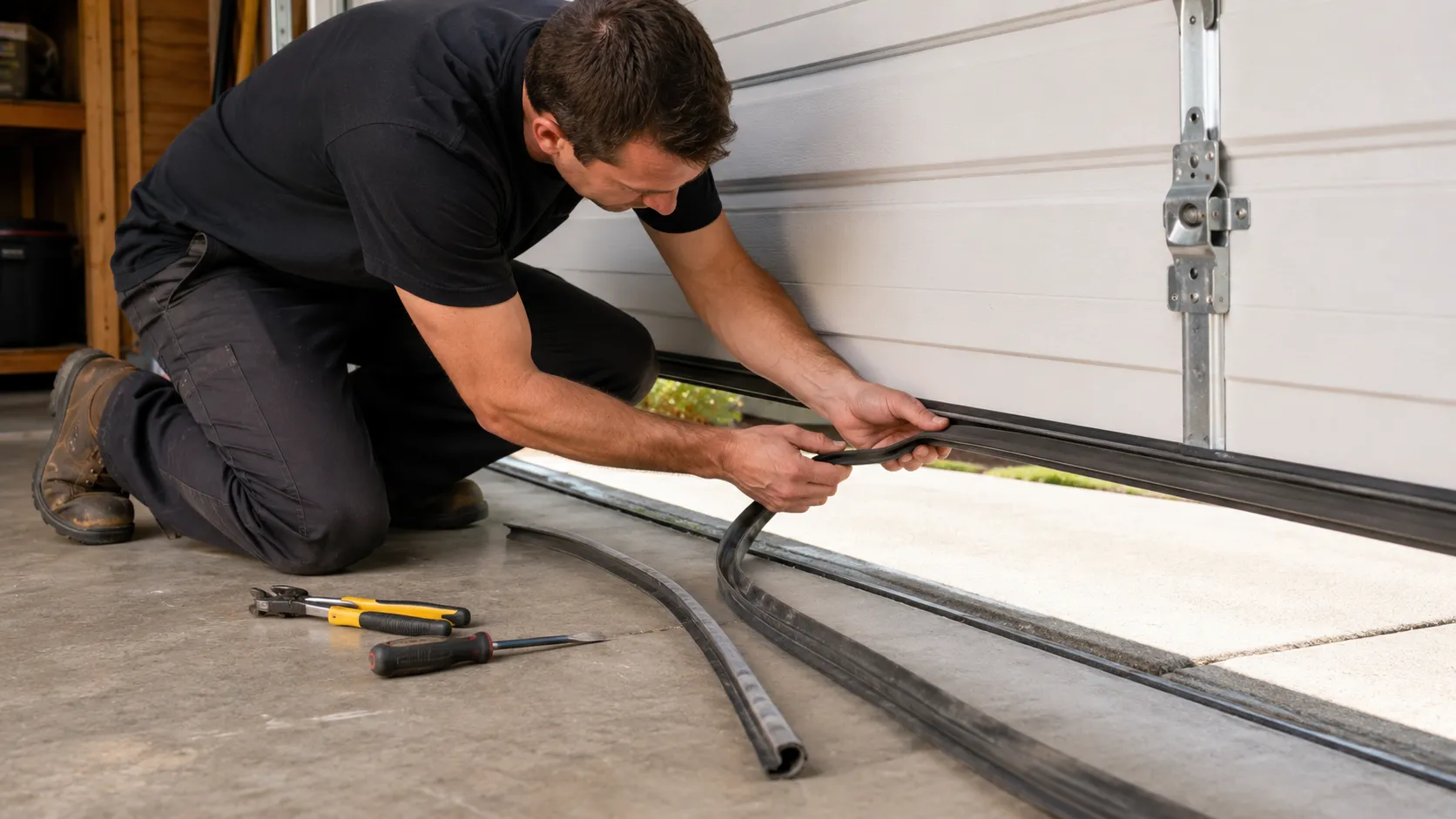
We're not going to put a number here that we can't back up on the phone, because the honest answer is that a track repair and a track replacement are two different invoices, and we can't tell which one your door needs without a rollers-and-brackets look in person. A bent section of track can sometimes be pulled back true. A track that's been bent, then bent back, then bent again usually can't - the metal work-hardens and it'll walk right back out of alignment within a season.
What we can tell you is what drives the number up or down: whether it's one side or both, whether the cable came off the drum in the process, and whether the rollers are original steel or have already been swapped to nylon. A lot of the owner-occupied houses in this area - and there are roughly 47,486 of them across the service area's 80,061 households - are far enough into their original hardware's life that a track call turns into a rollers-and-cable job at the same visit, since a tech is already up on the ladder.
We'll always tell you plainly if fixing the track is a stopgap versus a proper fix.
How Local Conditions Play In
Oklahoma City sits in a cold-moderate climate band, which means the ground under a slab or a shallow footing goes through real freeze-thaw cycles every winter, not just one hard freeze and done. That movement doesn't stop at the foundation - it walks the door frame itself a little, season over season, and a track bracket that's screwed into that frame moves with it. Over enough winters, brackets that were dead level start sitting a few degrees off, and that's enough to bind a roller.
Homes built in the 1960s and 70s stock common to this area, which is most of what's out there, were framed to the standards of their decade, not to today's, so the tolerance for that kind of seasonal shift was never built in the way it might be in newer construction. That's not a knock on the houses - it's just a fact of the era they went up in, and it means track alignment isn't a one-and-done fix here the way it might be somewhere with less seasonal swing.
We see the same pattern whether the house is close in or further out - the climate doesn't change much across the metro, and neither does the failure.
Where People Go Wrong
The most common mistake is trying to muscle the door back onto the track by hand while it's still under spring tension. That's how people get hurt, and it usually just re-bends the track in a different direction. The second most common mistake is replacing the rollers and calling it done when the actual problem was a bracket that had backed out of the framing - the door will jump again within weeks because the new rollers are still riding a track that isn't square.
We also see owners wait too long once a door starts making a new noise. A door that's dragging or clicking on one side is telling you the track is close to letting go, and catching it before the door fully derails is a much smaller job than catching it after. Given the age of hardware common in this area's housing stock, dating back toward 1959 in some cases, a lot of these small noises are original parts finally giving out rather than something that just happened.
We won't sell a full track-and-hardware replacement on a door that just needs a bracket reset - if the fix is small, we'll say so.
How We Can Help
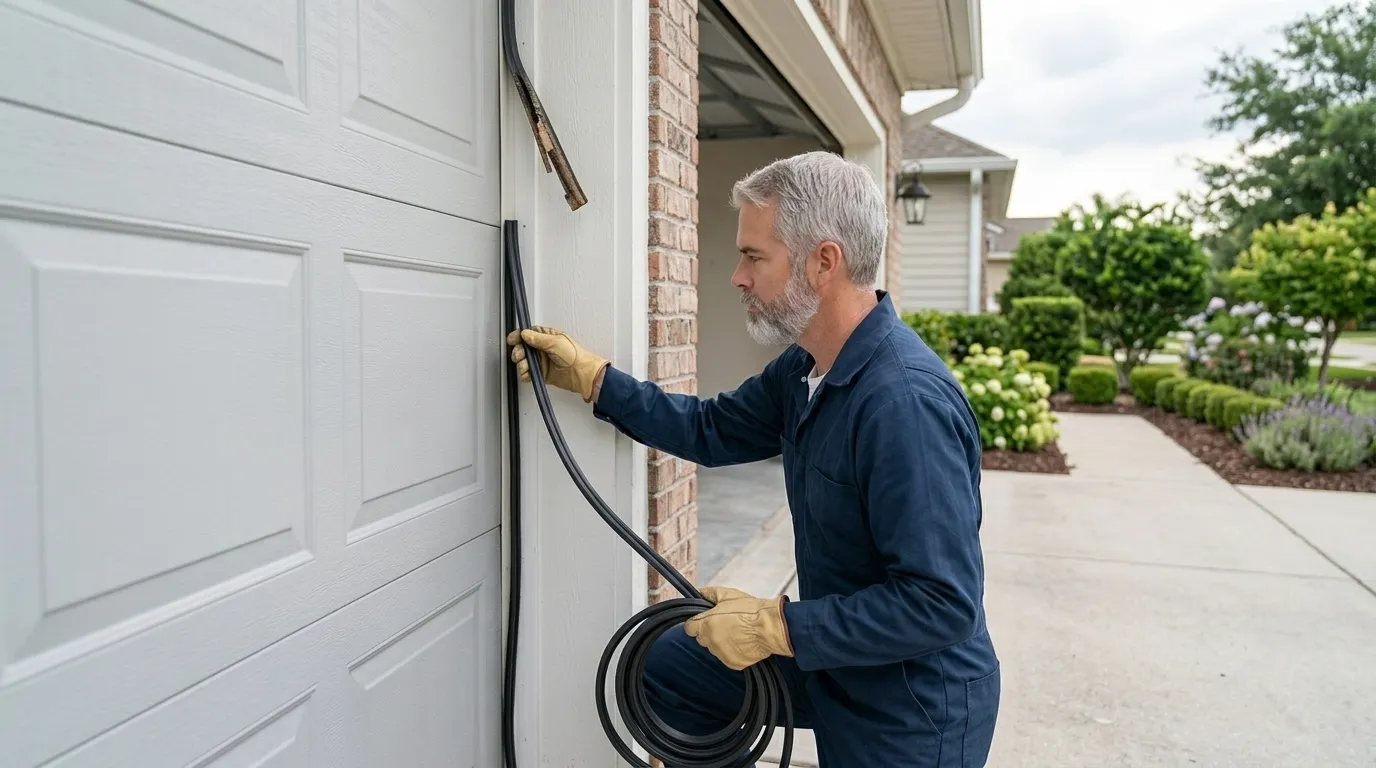
Garage Door Repair
Springs, cables, tracks, rollers, and openers fixed by a tech who explains the problem before touching anything.
Learn more →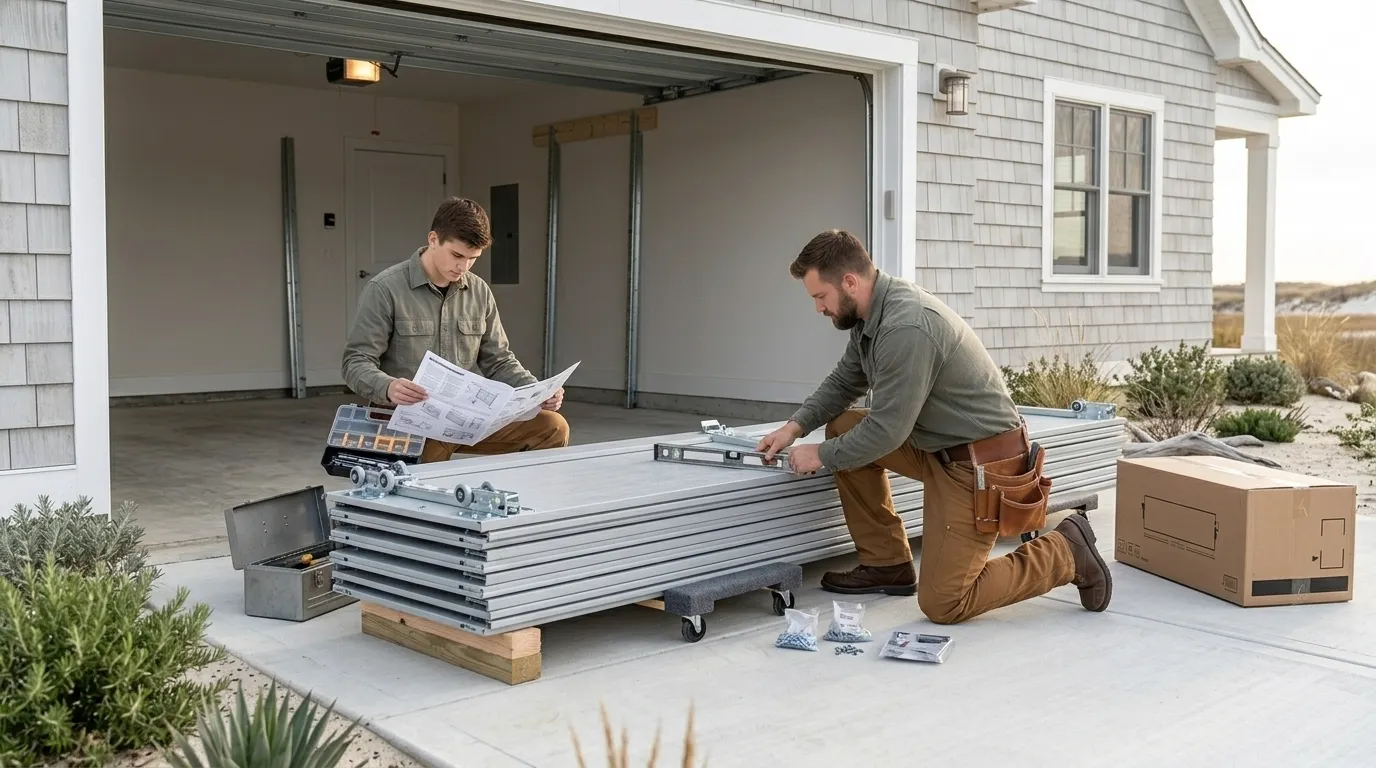
Garage Door Installation
New sectional doors sized and installed for the housing stock actually built in this area.
Learn more →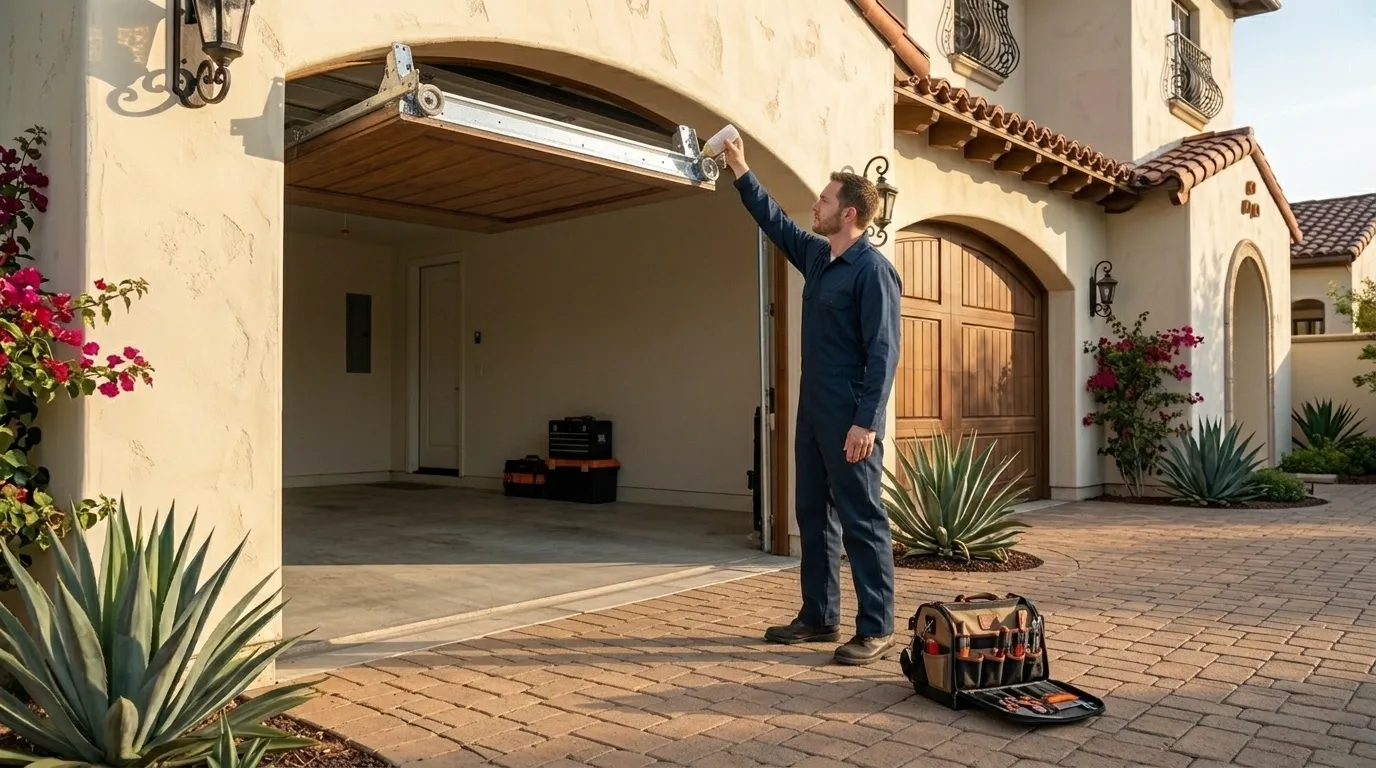
Garage Door Service
Tune-ups, lubrication, and safety checks that catch a small problem before it becomes a service call.
Learn more →Frequently Asked Questions
Can I push my garage door back onto the track myself?
No. The door is still under spring tension even when it's off track, and forcing it back can snap a cable or drop the door on you. It also tends to bend the track worse. Call it in and we'll release the tension safely before touching the track.
Why does my door only go off track in the winter?
Oklahoma City sits in a cold-moderate climate band, and the freeze-thaw cycle each winter shifts the ground and the frame the track is bolted to. If your bracket was already a little loose, winter movement is often what finally lets it go.
Is a bent track worth repairing or should I replace it?
It depends on how many times it's been bent. A single bend can often be pulled straight. A track bent more than once has usually work-hardened and will keep drifting - at that point replacement holds up longer than another repair.
My house was built in the 1970s - is my track original?
It's possible. A lot of the area's housing dates to right around 1972, and original steel track from that era is still common. We can tell you on the visit whether what's up there is original or has already been swapped.
Have a Door That Needs a Second Opinion?
Call and describe what it is doing - we will tell you what it likely is.